



Electric Car Winter Driving Tips: Range, Charging & Cold Weather Advice
Quick summary: Unfortunately, electric cars don’t perform as well in winter. It’s a fact. Expect to lose 15-30% of range in winter conditions, and sadly, sometimes even 40% in severe freezing conditions.
To offset the drop in range and drive and charge as safely and efficiently as possible, use our 17 electric car winter driving tips and tricks to mitigate this dip in performance:
- Use Eco Mode
- Be smart when heating your car
- Use indoor parking facilities where possible
- Keep an eye on your tyres
- Invest in winter tyres
- Precondition your electric car
- Drive conservatively
- Plan your journeys and buffer in additional time
- Make a short drive before using a rapid or ultra-rapid EV charger
- Cable care
- Maintain your EV charger and charging port
- Make use of a smart EV tariff
- Avoid 3-pin plug chargers and extension leads
- Have backup rapid charging point locations
- Keep your EV battery between 20-80%
- Carry an emergency winter kit
- Download map apps
It’s no secret: most cars don’t perform well in winter. Whether you own an electric, petrol or diesel car, cold weather has a negative impact on us all.
And while electric vehicles generally perform just as well as – or even better than – ICE vehicles, during the winter, many factors, including cold temperatures, icy roads, and snow, can affect how well your electric car will function. Decreased range (fewer miles out of a full charge on your electric car) is an unfortunate side effect of winter weather.
However, all is not lost. Today, we offer 17 tips and tricks for driving and charging your electric car in the winter, for safer, longer and more efficient journeys.
1. Use Eco Mode
Eco-Mode is a handy feature that almost all electric cars come packed with. In essence, the setting reduces power output across the vehicle, encouraging softer throttle response, reducing the energy supply to high-consumption features, slowing acceleration, strengthening regenerative braking – to name a few.
Cutting these corners means you can save on range, making up for the winter drop.
It isn’t solely a winter setting either; Eco-Mode is helpful if you find yourself in sticky situations where you need to conserve range, whatever the weather.
2. Be smart when heating your car
Using your electric car’s heater to heat the cabin is an inefficient way to use your battery. In fact, cabin heating can reduce range anywhere between 10% and 30% in freezing weather.
Mornings are busy, so if you forget to precondition your electric car before a journey, our advice is to try to heat yourself rather than the empty space.
By this, we mean you’re better off turning down the car’s main heater and cranking the heated seats and steering wheel up if you have them. Likewise, if you have a heated windscreen, use that rather than the blower to defrost. This way you preserve precious energy to take you further for longer.
3. Use indoor parking facilities where possible
Try to keep your electric car tucked away in a garage or in an enclosed parking space. Why? So your EV’s battery doesn’t get even colder than it needs to be.
A super-chilled battery won’t perform as well or take as much charge as a warmer one, so if you plan to drive your EV in cold climates, keeping your EV parked in a garage will help performance.
If you can’t, try to park in a spot in direct sunlight during the day. You’ll have a warmer battery and cabin when you get back in your car later – for free.
Another quick route is to invest in a windscreen cover or car cover.
4. Keep an eye on your tyres (especially the pressure)
Tyre pressure drops as the ambient temperature falls, leading to greater rolling resistance and reduced range.
It’s good electric car hygiene to check your tyres every month anyhow (including tyre pressure and tread depth), but it’s particularly important when temperatures drop considerably with the winter season. Ensure your tyres are equipped for bitter weather, but also for preserving range.
5. Invest in winter tyres (Not essential)
Despite your four-wheel drive, EVs can still be susceptible to skidding. This is where winter tyres come in. With more grooves, traction is increased, allowing your EV to have more grip on snow and ice.
While not essential, go the extra mile and protect your electric car and peace of mind by investing in specialist winter tyres.
6. Precondition your electric car
Preconditioning allows you to pre-heat your electric car’s cabin before getting in it, removing the need for heating devices and saving you precious miles – and time, as you’re warm from the get-go.
Tip: Keep your EV plugged in to charge at home, and your car will take electricity directly from your home’s electricity supply to precondition rather than its battery. Wake up to a toasty car and a full charge. Don’t lose range before you’ve set off.
All you have to do is set a scheduled “start” time, usually from your EV app or car settings.
Some electric cars even offer battery preconditioning, so you can warm up your EV battery to the optimal temperature for charging.
7. Drive conservatively
Avoid sudden acceleration and braking, and try not to drive at excessive speeds. This is good practice regardless of weather, but it makes all the difference in the wintertime.
Not only does it help maintain your range, but it also encourages you to take extra care when driving – which is paramount in slushy or icy weather.
8. Plan your journeys and buffer in additional time
With slight drops in range and the chance of unexpected severe weather, always plan your journeys and build in extra time for slow traffic and to factor in any emergency top-ups at public charging points.
9. Make a short drive before using a rapid or ultra-rapid EV charger
To encourage more efficient EV charging, take a short trip out before your planned charging session – it could be to the supermarket, around town, or simply down the street. Just get your battery up and running – and, more importantly, starting to warm up.
10. Cable care
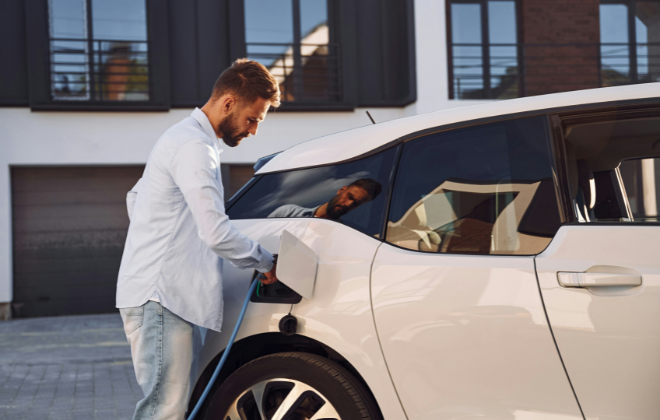
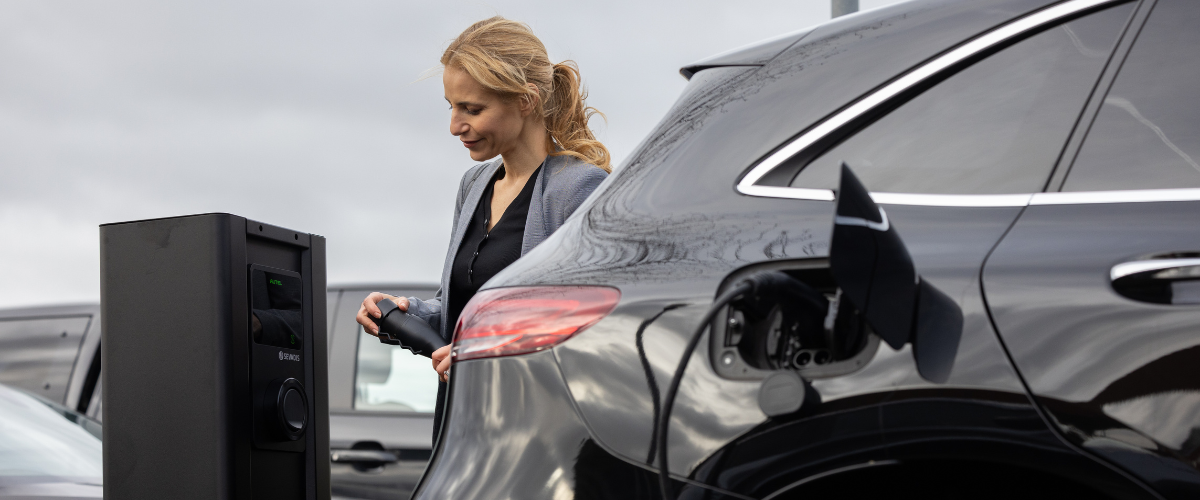
Tethered EV chargers have the charging cable permanently attached. In winter, take extra care when unravelling the cable. Try to avoid scraping the cable along the ground or trailing it on through icy or snowy patches to prevent damage.
Or, if you have an untethered EV charger – where the cable can be unplugged and stored elsewhere – make sure you’re wiping down the charging cable before storing it. You don’t want slushy snow in the back of your car – or worse – dripping in your home!
RELATED: Tethered vs Untethered EV chargers: Which is Better?
11. Maintain your EV charger and charging port
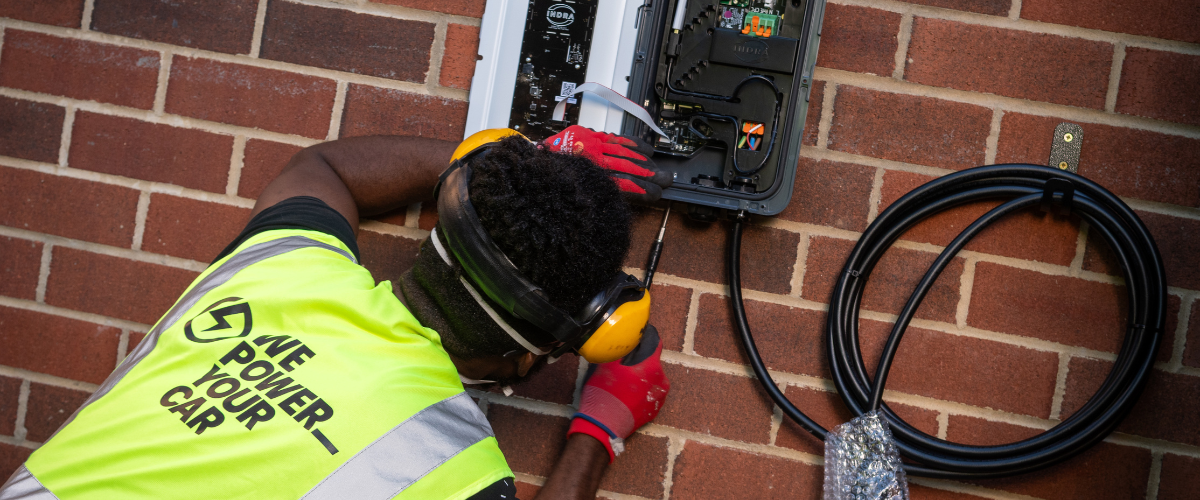
Perform quick maintenance checks for your EV charger as well as your car’s charging port for the safest charging sessions:
- Inspect your charger for any discolouration, kinks, or damage
- Brush away snow
- Wipe down any water
- Check for any water ingress
- Keep the area clear and ice-free
12. Make use of a smart EV tariff if you can
With a drop in range, you’re likely going to be topping up more than usual, and that’s on top of rising heating bills. Mitigate this with a smart EV charger and an EV tariff, and charge for mere pence during off-peak hours.
Take a look at your options:
13. Avoid 3-pin plug chargers and extension leads
Without scaremongering, 3-pin plug EV chargers aren’t the safest to begin with. Designed for appliances that draw power in small bursts, 3-pin plug EV chargers aren’t made for sustained high-load equipment such as EV charging.
Add in wet, windy or snowy conditions, and the chance of water ingress and electrical faults increases. 3-pin plug chargers are not like smart home chargers – which are designed and tested to be completely weatherproof.
If you’re planning to use a 3-pin plug charger during the winter months, please switch to a home EV charger or, if that isn’t possible, a public charging point.
14. Have backup rapid charging point locations
Keep a record of your nearest public charging points in your back pocket – not just your usual stop at the supermarket. With the drop in range, you don’t want to be caught out with a 10% battery and no charger in sight, especially with queues.
Of course, the typical public charger cost is 79p per kWh, compared to home EV charging, which can cost as little as 7.9p per kWh with the right set-up*. Home charging is always cheaper.
*Intelligent Octopus Go EV tariff and a compatible smart charger.
15. Keep your EV battery between 20% and 80%
Keeping your battery between 20% and 80% state of charge is a tip for maintaining the best battery health, but doing so during the winter months encourages less battery stress, preventing battery degradation.
On top of this, keeping this 20-80% range gives you peace of mind, as a winter 20% is not the same as a standard 20%. Often, it’s less range. Don’t get caught out short.
16. Carry an emergency winter kit
Whether an internal combustion engine or electric car, pack an emergency winter kit and tuck it away in your boot – just in case.
Winter car essentials could include:
- De-icer
- Ice scraper
- Torch
- First-aid kit
- Warm blanket
- Breakdown cover information
Nice-to-haves:
- Power bank for phone
- Paper maps
17. Download map apps
In the worst-case scenario, if you get stranded or find yourself in a new place with limited range, having a map app, such as Zap-Map and PlugShare, gives you a quick, easy way to check for your nearest charging points, especially in freezing temperatures.
Why do electric cars have less range in winter?
Electric cars have less range in winter because of their lithium-ion batteries. Why? Because, similar to mobile phones, when the temperature plummets, it affects the battery chemistry. Chemical reactions slow down, as does your EV’s efficiency.
Just like mobiles – also made with lithium-ion batteries – the optimal temperature for electric car batteries is between 15 and 25 degrees Celsius.
EV charging and cold weather: What’s the impact?
When EV batteries are cold, they accept charge more slowly, meaning the charging speed can sometimes be less than the stated rate. 7.4kW, for example, may only be 7kW in cold weather conditions. It’s considerably worse with rapid and ultra-rapid charging stations. And it’s all to do with protection; the EV battery limits speed to heat up first, preventing damage.
For optimal charging, precondition your battery first, if you can. In Norway’s El Prix 2026 winter test, the majority of the 24 EVs came close to their stated charging times after being preconditioned.
Should you be worried about electric car range in winter?
In our expert opinion, no, you shouldn’t worry. While driving and charging might not be BAU in winter, being aware of the potential for decreased range is the key thing here. And with our tips and tricks, you should have peace of mind in winter.
Try not to worry too much. On top of this, Norway is the leading country for EV adoption, with approximately 172,549 battery electric cars sold in 2025, a 95.9% share of all new car registrations, despite the severe winters they face. With this in mind, there should be minimal cause for concern when driving your EV during the winter months in the UK.
That said, if you suffer from range anxiety, you could invest in a heat pump to help maintain your EV’s range in the colder months – but it’s not a requirement. No matter what car you drive, snow and colder temperatures will always affect vehicle efficiency.
Electric car cold weather range: a snapshot
EV range fluctuates in cold weather, differing from official WLTP range. Take a closer look at some real-world examples. Data from EVDatabase.
Electric car |
WLTP range |
Cold weather range |
Range drop in cold weather VS WLTP range |
| Tesla Model Y | 309-326 miles | 195 miles | 40% |
| Kia EV3 Long Range | 350-376 miles | 235 miles | 38% |
| Nissan Leaf Standard Range 52 kWh | 271-277 miles | 170 miles | 39% |
| Porsche Taycan | 313-367 miles | 255 miles | 31% |
| Mini Cooper E | 182-190 miles | 130 miles | 32% |
Winter is coming. EV owners: get winter-ready with a home EV charger and charge cheaper, safer and warmer.
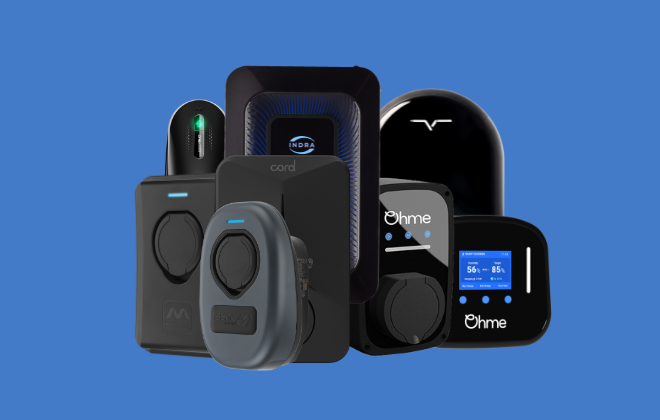
Purchasing a smart home EV charger takes the stress out of winter EV driving and charging. Charge for cheaper, schedule charging with the touch of a button, and set preconditioning without eating away at your current charge.
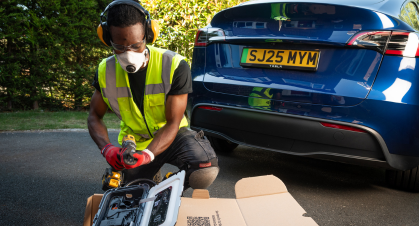
Trust We Power Your Car for your EV charger and installation. With in-house engineers nationwide, we can install wherever you are, all with first-class customer service.
Don’t believe us? Browse thousands of 5-star Trustpilot reviews. Spoiler: We’re rated 4.9 Excellent.
Alternatively, take a closer look at our experience and credentials:
- CoMCoP Elec EMO and SIP
- ISO (ISO 9001, ISO 14001 and ISO 45001)
- OZEV
- NICEIC
- TrustMark
- Alcumus Safe Contractor
- HERS
- Cyber Essentials
- 40,000 installations
Get your free EV charger and installation quote, browse our wide range of smart EV chargers, or call one of our EV charging experts today at 03333 44 96 99.