




EV Charger Installation in the UK: Costs, Process & How Long It Takes (2026)
Home EV charging guarantees cheaper, greener and smarter EV charging. But how do you get an EV charger installed? How much does it cost? What does the timeline look like?
Unfortunately, it’s not as simple as purchasing a phone charger or plugging in a new appliance. EV chargers are high-powered pieces of equipment that involve navigating regulations, requirements, and permissions to ensure a safe, compliant installation.
In our guide, we cover everything you need to know about EV charger installation in the UK.
Quick summary:
- Most EV charger installations in the UK cost, on average, between £799 and £1,500 and take 2-4 weeks to plan and 2-3 hours for the actual installation.
- Your standard EV charger installation process includes mounting a 7kW EV charger on a wall, notifying your local DNO, and having the work completed by a licensed, OZEV-approved EV charger installer. However, some installations require more work and, in turn, are more costly and time-consuming. On average, about 90% of EV charger installations in the UK fall under a standard installation, but some, especially those with on-street parking, will be more complex.
Written by We Power Your Car: An independent, nationwide EV charger installation company with over 40,000 home and commercial installations completed across the UK and over 50 in-house EV charger installers. 4.9 on Trustpilot. SIP-accredited. OZEV-approved.
Last updated: October 2026
Can I have an EV charger installed at home?
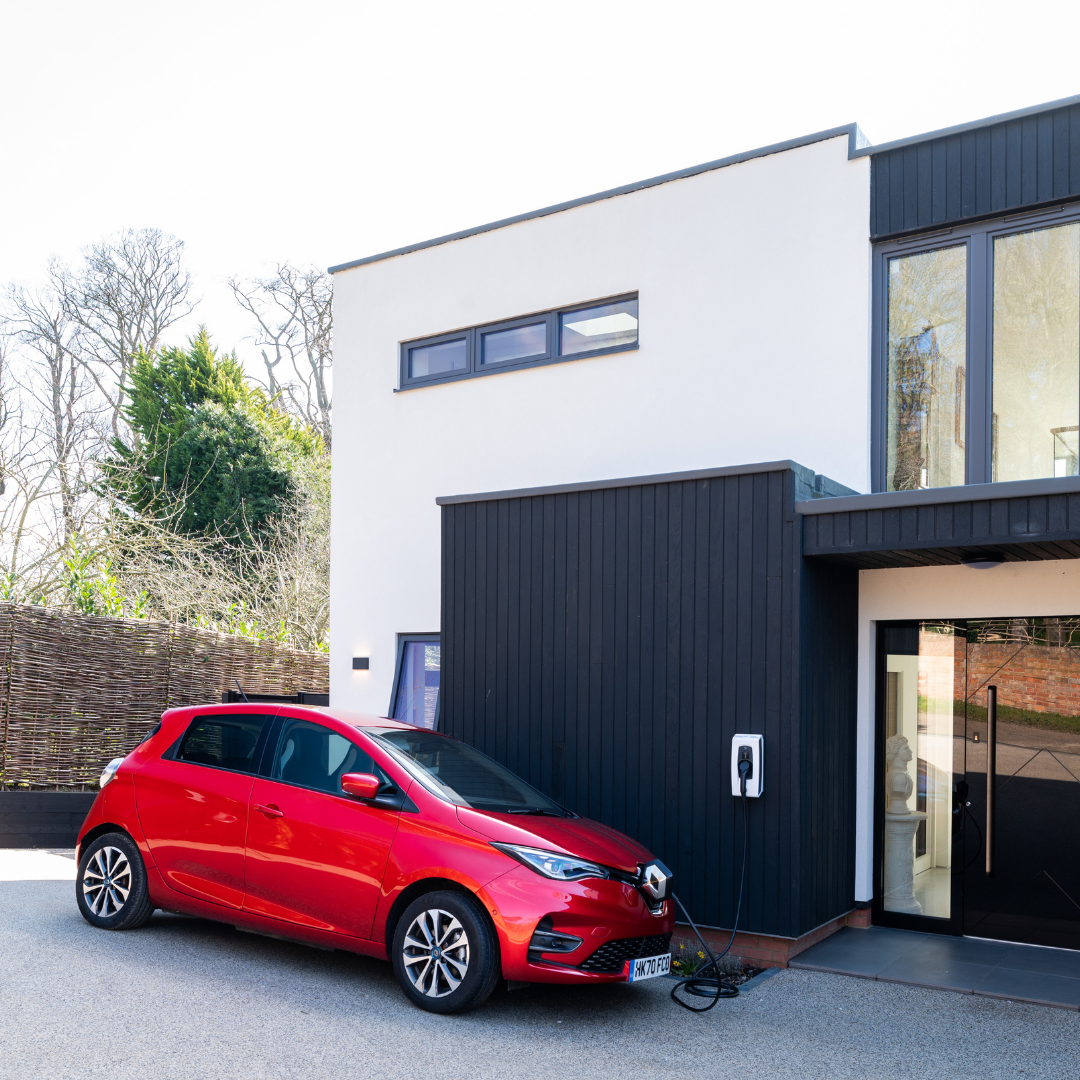
It’s good news: you can have an EV charger installed at home. That said, the complexity and cost of the job depend on your property type.
On-street parking:
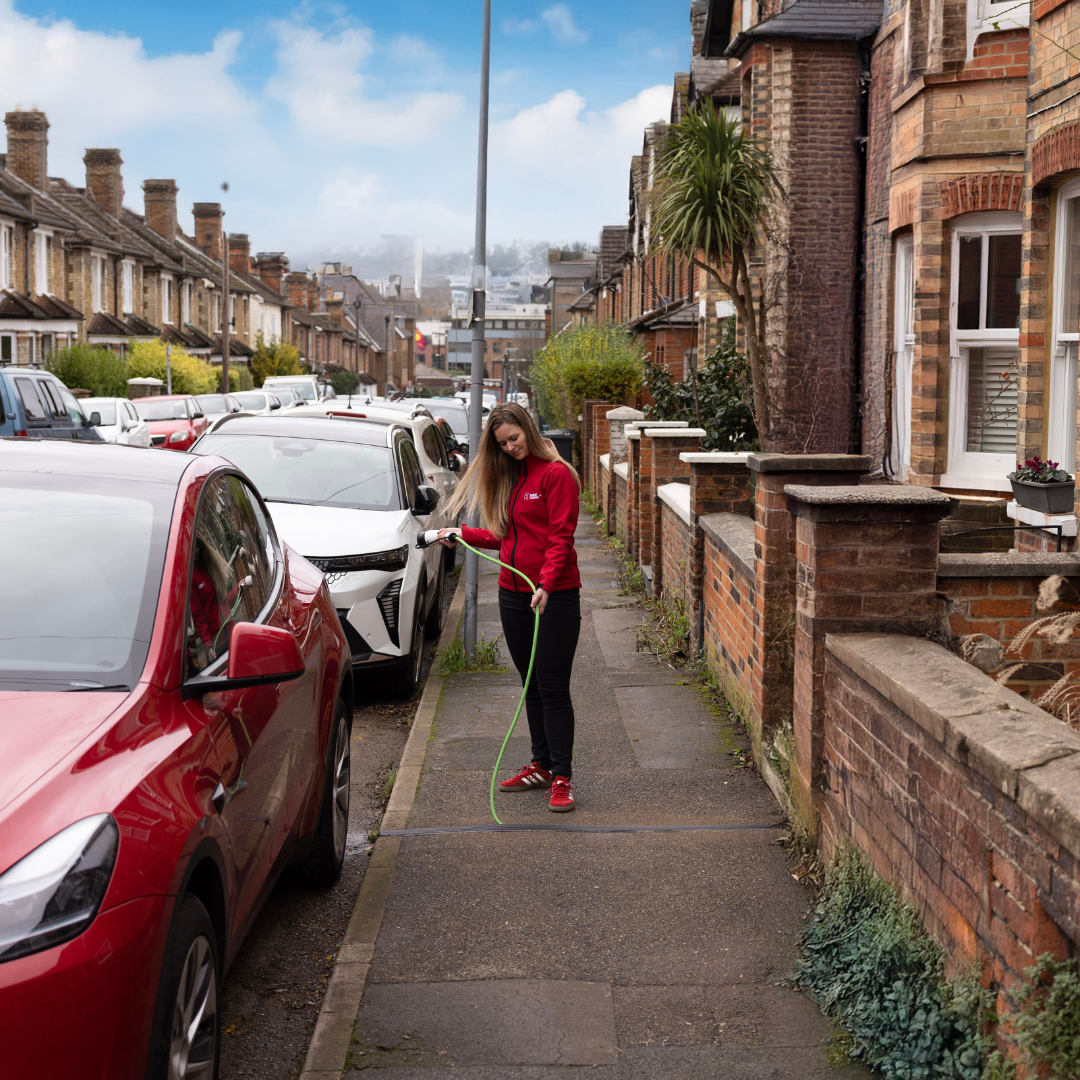
EV drivers with on-street parking can now have an EV charger installed, something that wasn’t possible a decade ago.
To be able to do so, however, it requires additional on-street EV charging infrastructure, such as a cross-pavement cable gully or overhead arm, and usually involves gaining permission from your local council.
On-street installations are more challenging and complex, and in turn, more expensive.
Off-street parking:
The most straightforward scenario for an EV charger installation.
With off-street parking, nine times out of ten, it’s a standard installation, especially for single-unit homeowners, like detached houses.
One to note is that if you live in rented accommodation, you will need permission from your landlord.
Can I install my own EV charger?
In short, technically, you can install your own EV charger. But, as an experienced, qualified and specialist electric vehicle charger installation expert, we strongly urge you not to install an EV charger yourself unless you have the relevant qualifications, experience and knowledge of the rules and regulations to do so safely and compliantly.
Electrics are not something you mess with, for starters.
Overall, we would recommend hiring an experienced professional, such as an OZEV-approved company or an accredited electrician instead.
Why shouldn’t I self-install my EV charger?
1. Self-installing can be more expensive in the long run.
If you install the EV charger incorrectly, you will have to pay a professional to reinstall it correctly. Doing so will likely be at a higher cost than originally quoted for a standard installation.
That’s not mentioning the additional work and cost of the installer fixing any mistakes or damage that may have occurred during failed installation attempts (think widespread circuit shorting) – if they even can.
One of the worst-case scenarios is that your EV charger sustains significant damage during your attempts at installation. If this happens, you will either have to purchase a brand-new home charger and be drastically out of pocket or sustain the loss, have no home charger and miss out on substantial savings.
2. Self-installation leads to a loss of warranty
On top of the installation costs, if you choose to install your own EV charger, you will void the manufacturer warranty that comes as standard.
So, unfortunately, you will no longer be entitled to repairs or a new unit if your charging point has any issues in the future.
3. High risk of damage or injury
When taking the DIY EV charger installation route, there is a high chance of serious harm to yourself or others. Electrical shocks or even accidental electrical fires are some of the dangers of installing your own EV charger.
Ultimately, dealing with an electrical installation is dangerous and complex, and is not worth the risk. That’s why it’s best practice to choose installers with experience, the correct qualifications, and training to undertake the EV charging station job to ensure peace of mind.
4. Regulations and permissions
Electricians are aware of all the relevant safety regulations and permissions, which means they can ensure that your EV charger is installed in accordance with all the necessary safety guidelines and rules, offering you peace of mind knowing your charger is safe and compliant with the latest regulations.
What is an expert specialist for EV chargers?
Engineer. Electrician. Installer. Expert specialist. The names for those who install EV chargers may seem never-ending. But don’t worry, they all mean the same thing.
But what do you need to be able to legally install EV chargers in the UK?
In simple terms, an EV charger expert specialist is a qualified electrician who has completed a training course for installing EV charger equipment (Electric Vehicle Charging Installations 2921) and is registered with a Competent Person Scheme (such as NICEIC or NAPIT).
The EV charger installer should also be approved by OZEV (Office for Zero Emission Vehicles) if you want to take advantage of a grant.
What are the requirements for an EV charger installation in the UK?
1. Property ownership or landlord permission
2. Approved and accredited EV charger installers (OZEV, NICEIC, Safe Contractor, as examples).
3. Off-street parking or an adequate EV charging solution for on-street parking
4. Suitable EV charger location with plenty of room to plug in. If wall-mounted, the EV charger must be on a permanent structure such as a brick wall.
5. A strong, stable Wi-Fi or 3G/4G mobile connection. Otherwise, a dongle or booster will be required
6. Suitable electricity supply: At a minimum of 3.6kW, maximum of 22kW, but with 7kW as the typical supply rate.
RELATED: Dive into the details in our comprehensive guide to EV charger installation requirements.
How much does an EV charger installation cost?
For a 7kW smart home EV charger and standard installation in the UK, you’re looking at around £799 to £1,500, based on our experience within the industry.
EV charger and installation costs |
|
| 3-pin plug EV charger (no installation needed) | £100-£200 |
| Portable EV charger (no installation needed) | £80-£190 |
| Smart EV charger only | £350-£600 |
| Installation only | £500 – £1,000, depending on the complexity of the job |
| Re-installation of an old unit | £300-£500 |
| EV charger and standard installation | £799-£1,500, depending on grant eligibility and complexity of the job |
That said, the price will fluctuate massively due to several factors, including:
- EV charger speeds (power rating)
- Complexity of the installation
- Grant eligibility
- Electrical supply updates
- Mounting location
- Smart features
EV charger installation cost examples:
Example 1: A 7kW smart home EV charger and standard installation
| Items | Cost |
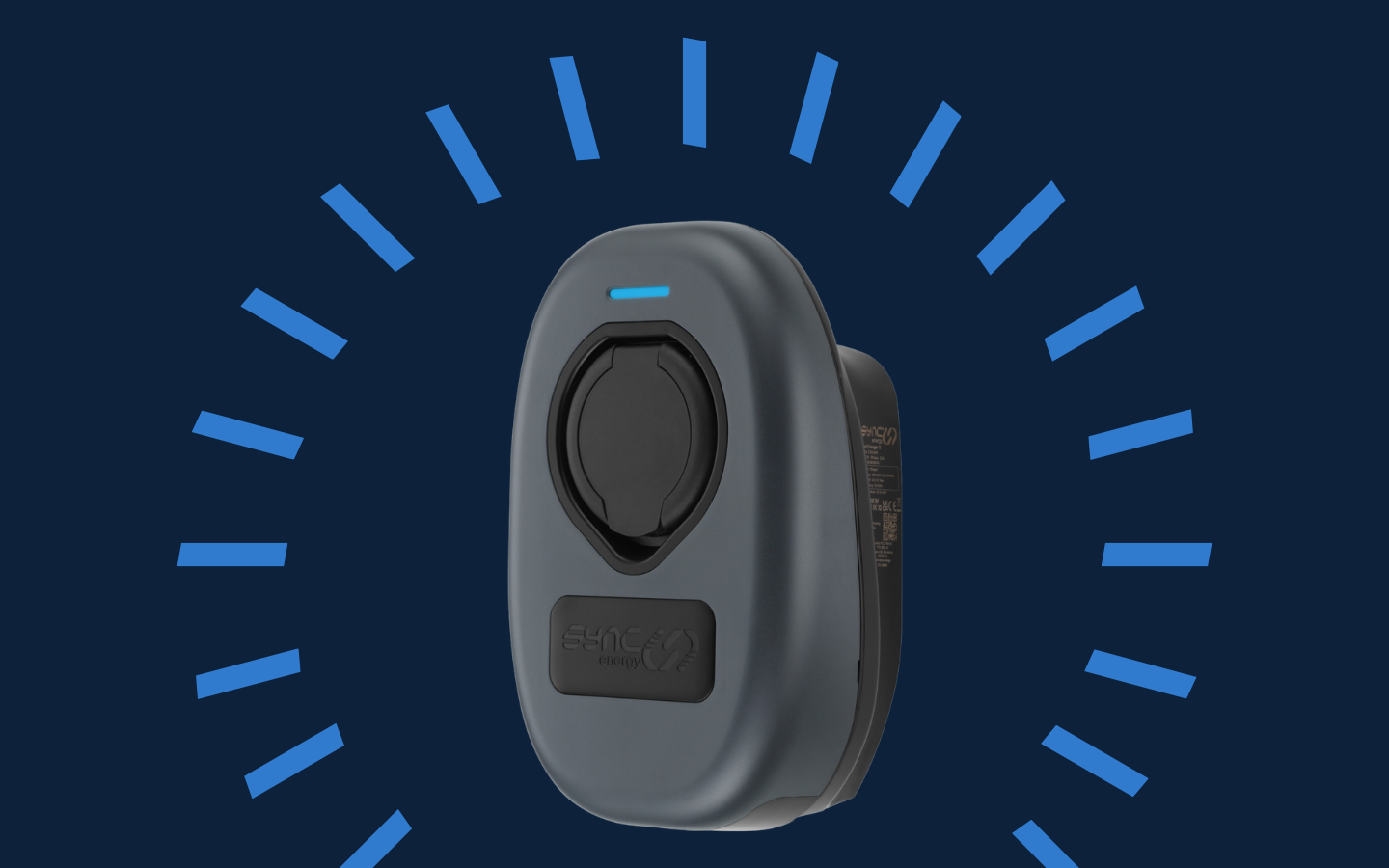
| Sync Energy Wall Charger 2 and standard installation | £849 |
| Extras | N/A |
| Total | £849 |
Example 2: A 7kW smart home EV charger and standard installation with grant applied
| Items | Cost |
| Easee One | £999 |
| EV Chargepoint Grant (75% at £500) | £500 |
| Total | £499 |
Example 3: A 7kW smart home EV charger installed with a surge protection device and 5 meters of additional cabling
| Items | Cost |
| Zappi Glo and installation | £1,049 |
| Surge protection device | £60 |
| 10 additional metres of cabling | £100 |
| Total | £1,209 |
Are there any regional price differences for EV charger installations?
In short, no: in our experience, EV charger installation costs should be the same no matter where you are in the UK, unless there is significant travel required for the engineer.
We do not offer regional-based pricing, with our standard installation pricing remaining the same no matter where you are in the UK.
What additional work can impact your EV charger installation cost?
Additional works |
Average cost |
Why it’s needed |
| Surge protection device | £60 – £100 | Protects your smart EV charger and your home from voltage spikes. |
| Earth rod | £5 – £20 | Required if your EV charger doesn’t come with PEN fault protection to create a safe path for the voltage into the ground. |
| Gas and water bonding | £100-£500 | Reduces the risk of electric shocks by providing a safe path for faults. |
| Cable run (when over 10m) | £50-£500 (typically £10 extra per meter) | If your charger is further from the consumer unit than offered in the standard installation package. |
| Trenching | £20-£80 per meter | Needed when cables must be run underground, such as for a detached cable, to keep cabling out of sight and protected from impact. |
| Groundwork | £100 – £800 | Running cabling underground, resurfacing after trenching, levelling or preparing mounting area for post-mounted charger are all classified as extra work, or ‘groundwork’. |
| Supply upgrade | £500 – £6000 | Insufficient supply capacity or if you want a three-phase electricity supply. |
| Fuse upgrade | Free | If your main fuse is too low for the added electrical load of an EV charger, you’ll need a fuse upgrade. |
| Post mounting | £100-£500 | If you want your EV charger mounted on a post rather than a wall. |
What’s usually included in a standard EV charger installation?
For a standard installation, you’re typically looking at:
- Fitting of a single-phase charge point to a brick or plaster wall or other suitable permanent structure
- Up to 10 metres of cable, run and neatly clipped to the wall between the electricity supply meter/distribution board and the charge point.
- Routing of the cable through a drilled hole in a wall up to 500mm (20 inches) thick if this is needed.
- The fitting and testing of electrical connections and protections required for the charge point.
- An additional three-way consumer unit, if required, and installation of a Type A RCBO in an RCBO enclosure.
- Up to 3 metres of plastic trunking to conceal interior wiring. An O-pen earth protection device if the charge point requires it. (This is NOT an earth rod)
- Up to 4 hours of labour from your installer to complete the work & Electrical testing of the whole installation. Handover and setup of the charge point and any app that may be needed.
Note: Surge protection devices are usually not included in a standard installation package. For more information on SPD, including its purpose and whether you need it, please refer to our guide.
The vast majority of houses will fall under the standard installation package. Like a package holiday, everything you should need is included to make the process simpler for you.
Are there any EV charger grants?
Yes, there are five EV charger grants: two for residents and three for businesses.
For domestic installations, you’re looking at:
- Flat owners and renters: 75% off an EV charger installation, up to £500.
- Households with on-street parking: 75% off an EV charger and installation, up to £500. Additional on-street infrastructure is required to be eligible for this grant.
How to install an EV charger at home:
The step-by-step installation process for an EV charger in the UK:
1. Choose your smart EV charger
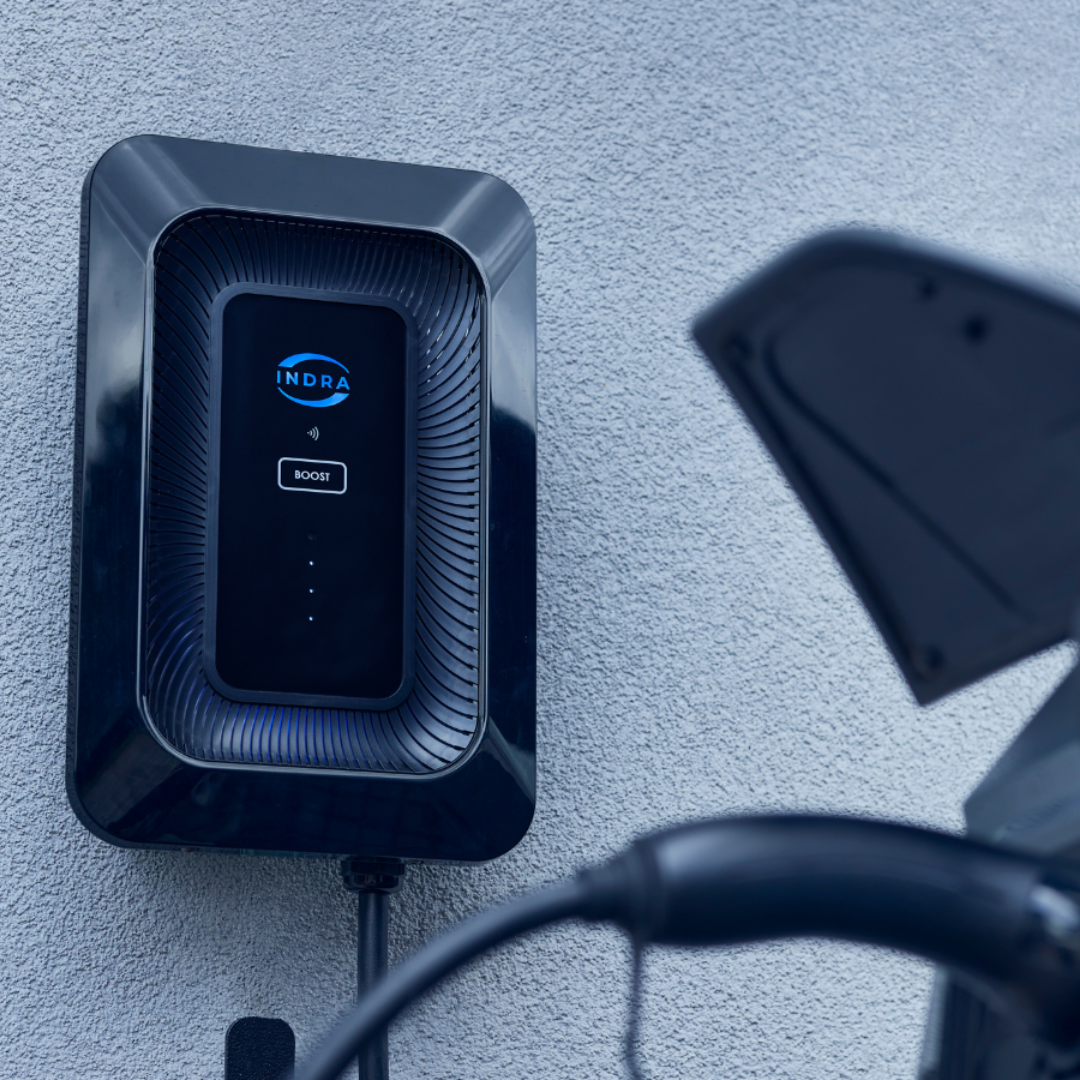
EV chargers are not all the same. Different EV chargers have different smart features, styles, speeds, and more. Use this time to explore your options.
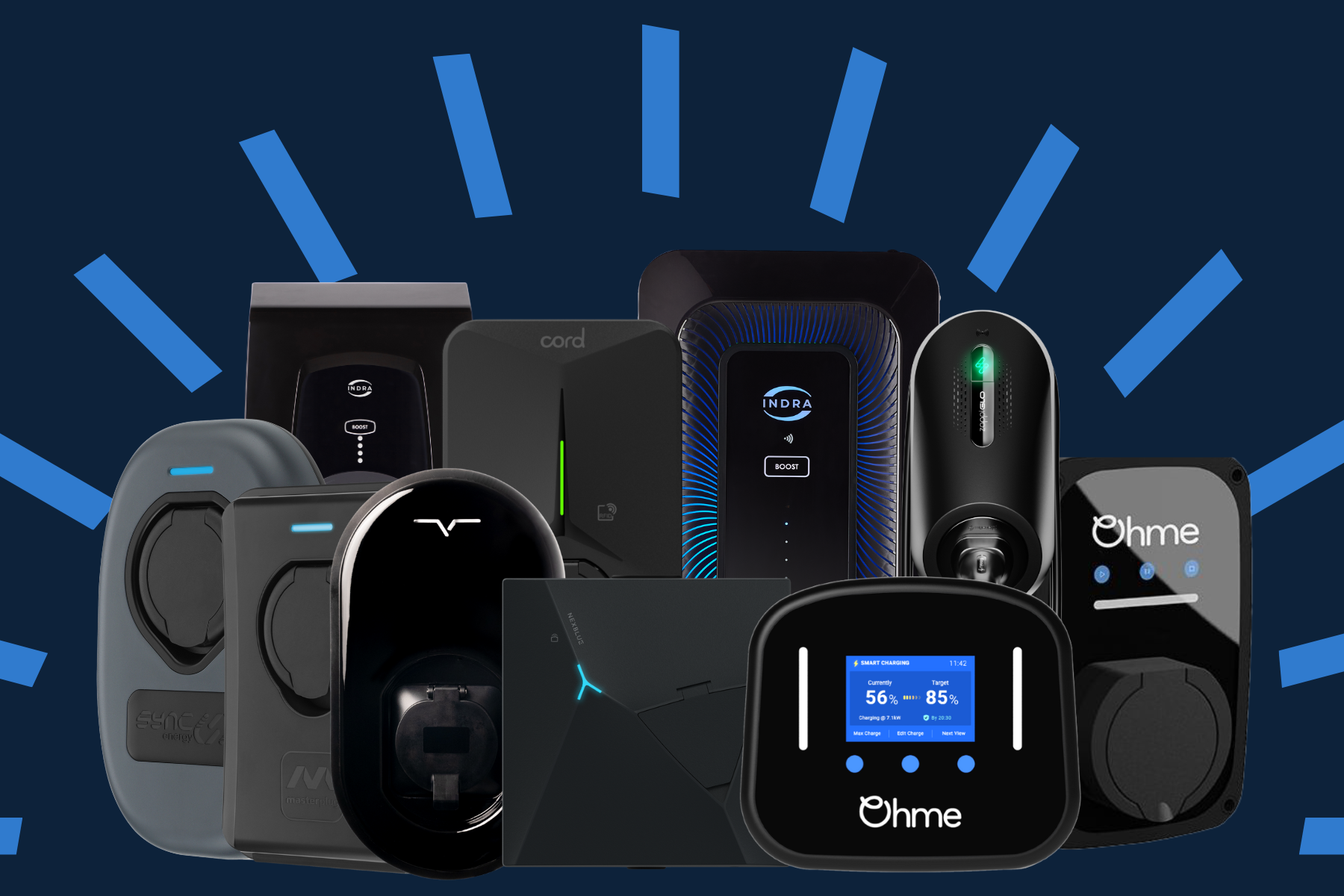
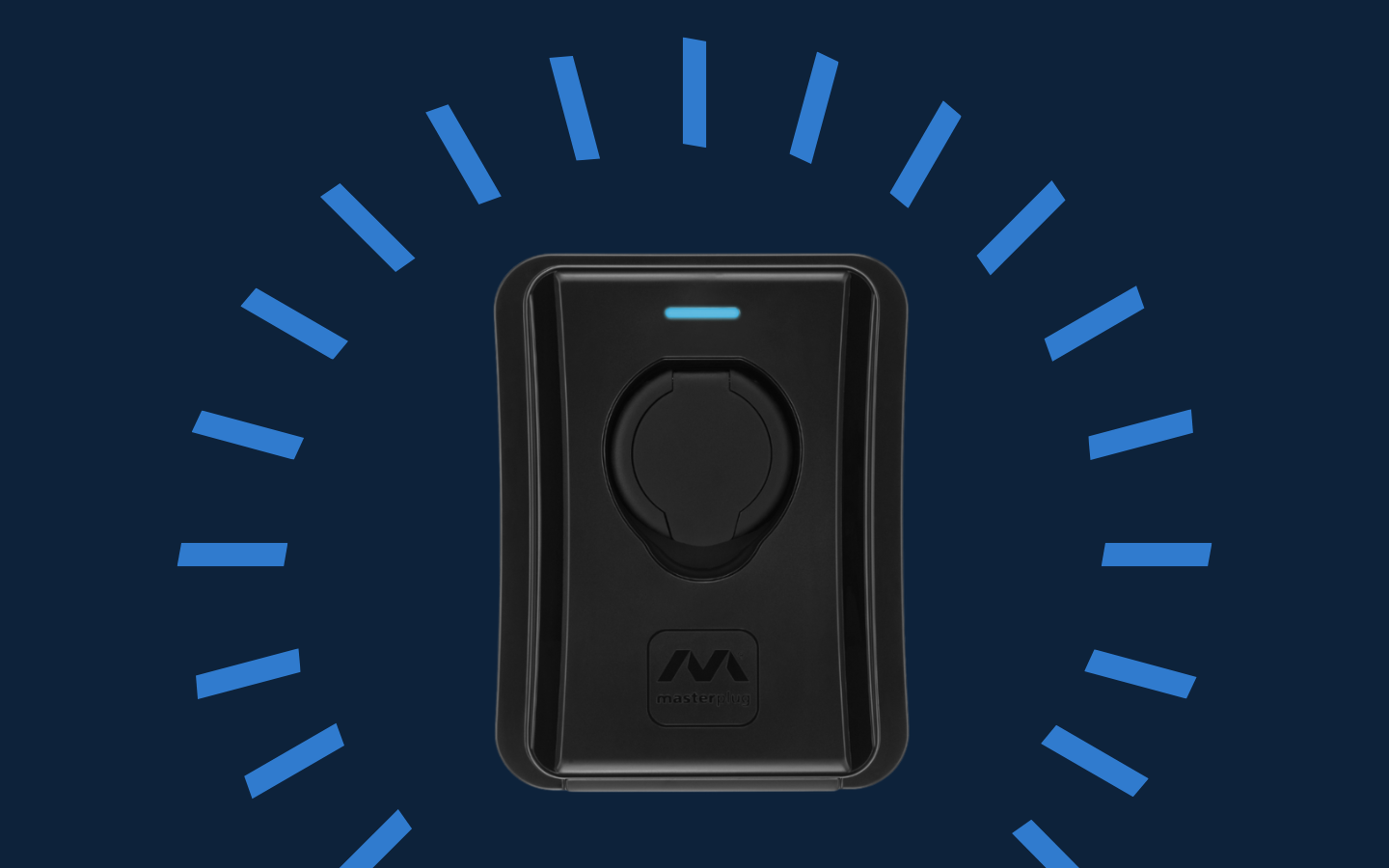
Go directly to charger manufacturers, such as Ohme, Zappi, or Sync, or browse a wide range of smart EV chargers from OZEV-approved installation companies.
Don’t forget to scan the company, not just the EV charger. An experienced and accredited installation company will make the process easier.
2. Get your quote
Follow the steps from your chosen installer to get your free EV charger and installation quote.
Sometimes this will have to be via email, but other installers, such as ourselves, offer free, quick quotes online.
Simply answer the questions and get your quote right then and there.

3. Online site survey
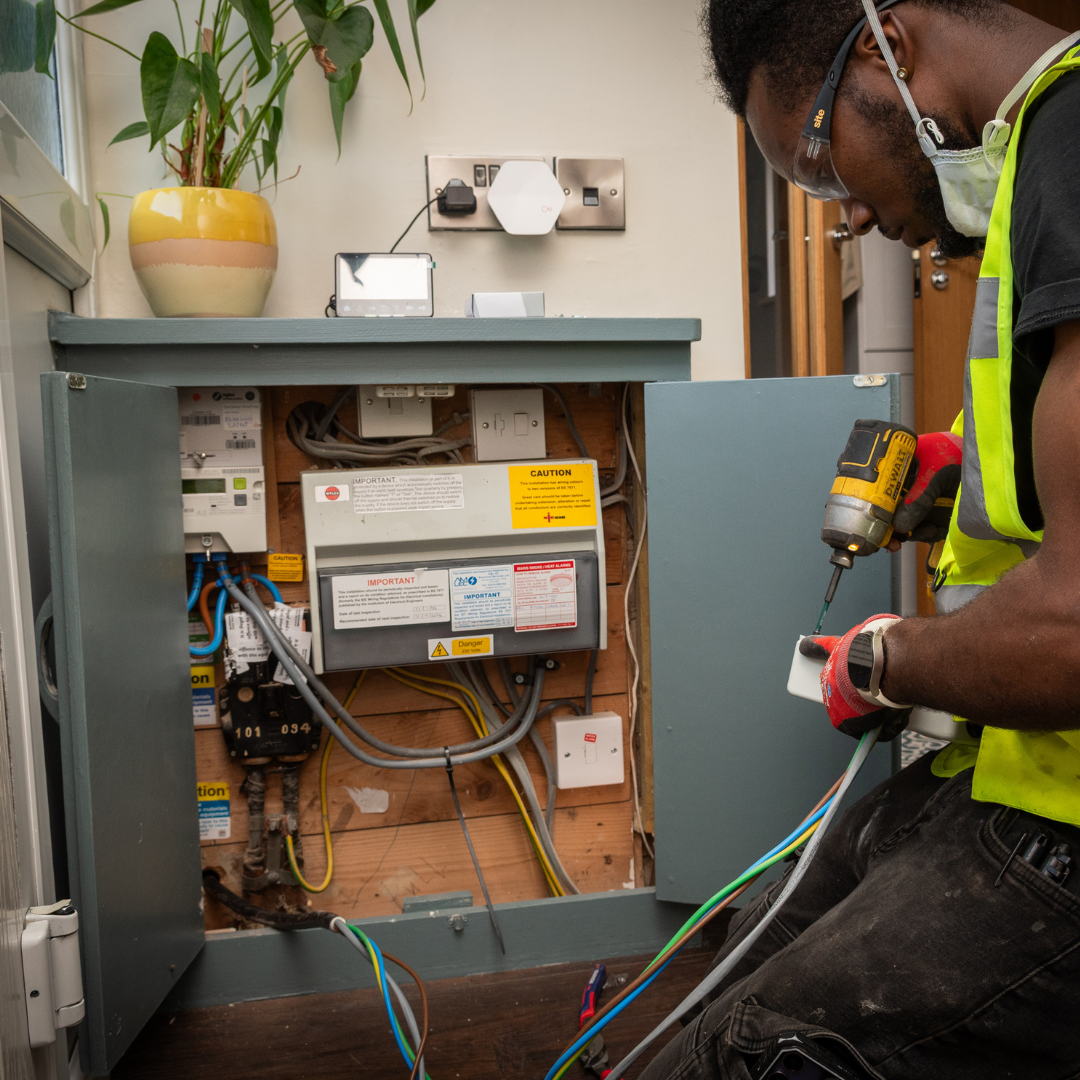
Confirm your details, then take a few pictures and record a handful of videos of your:
- Fuse board (including main fuse)
- Consumer unit (to check capacity)
- Electricity meter
- Proposed cable route (starting from the consumer unit to your chosen EV charger location)
With these details, the installers should check:
- If the charger location is viable
- If any potential upgrades are required
- If earth bonding (gas and water bonding) is present
Your installer should also confirm with you what connectivity is like at the property (if Wi-Fi or mobile connection is strong and present).
Top tip: Record your cable run during the day, ideally when lighting will be natural and strong.
If you’re struggling with your online survey, your chosen installer should offer support. Alternatively, you could request an in-person site survey, but this will likely be for an additional fee.
4. Pay for your charger and installation
Pay outright or spread the cost over time with finance or Klarna.
5. DNO notification and approval
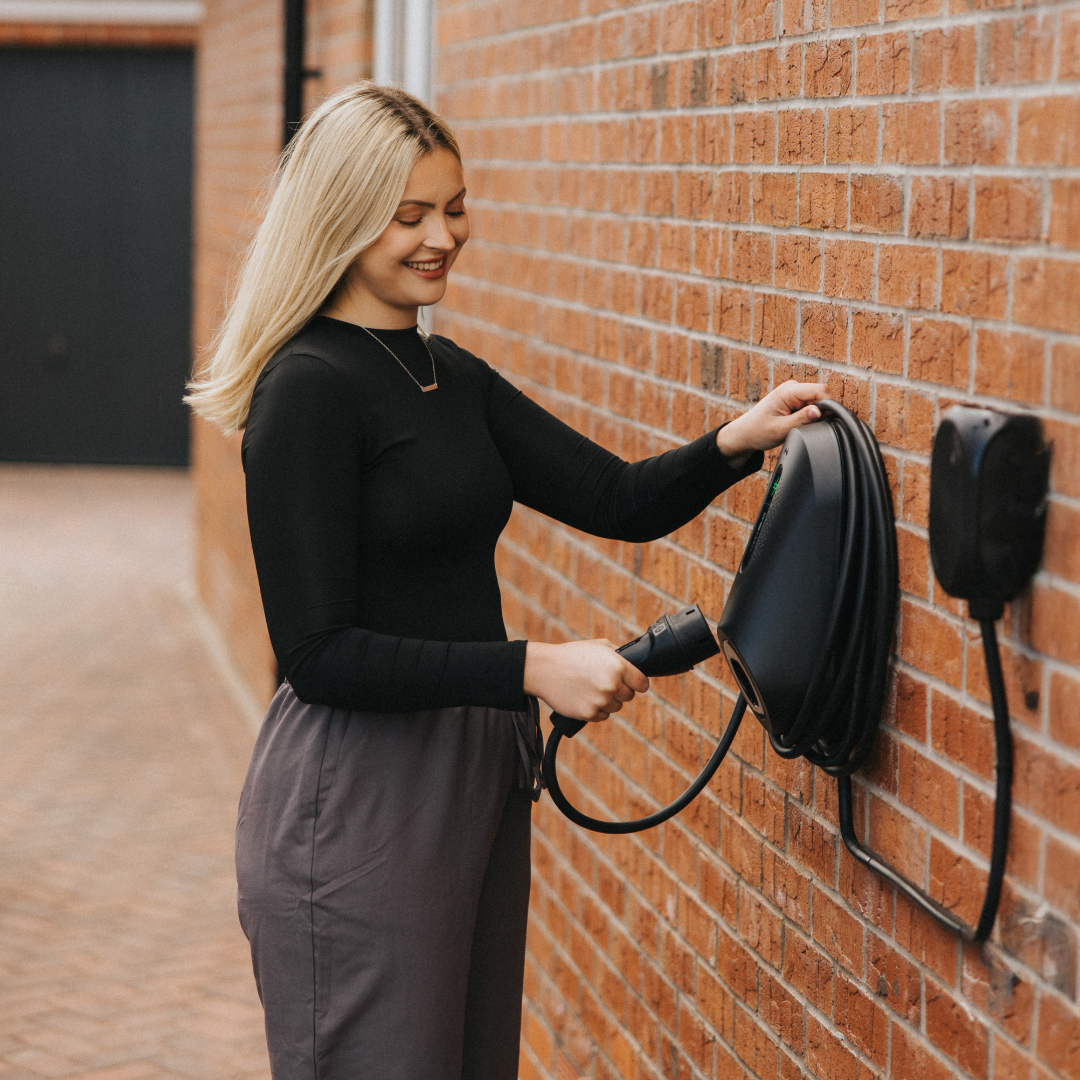
DNOs manage your electricity supply. Notifying your Distribution Network Operator (DNO) is an essential part of any EV charger installation. In fact, it’s a legal requirement.
You don’t need to notify the DNO; your chosen installer will do it for you.
If they don’t mention the DNO throughout the process, this could be a red flag.

6. Permissions, planning, and scheduling your installation
Once DNO approval, relevant permissions, and grant acceptance have come through, your chosen installer will schedule your installation date.
Cheaper, greener EV charging is coming your way.

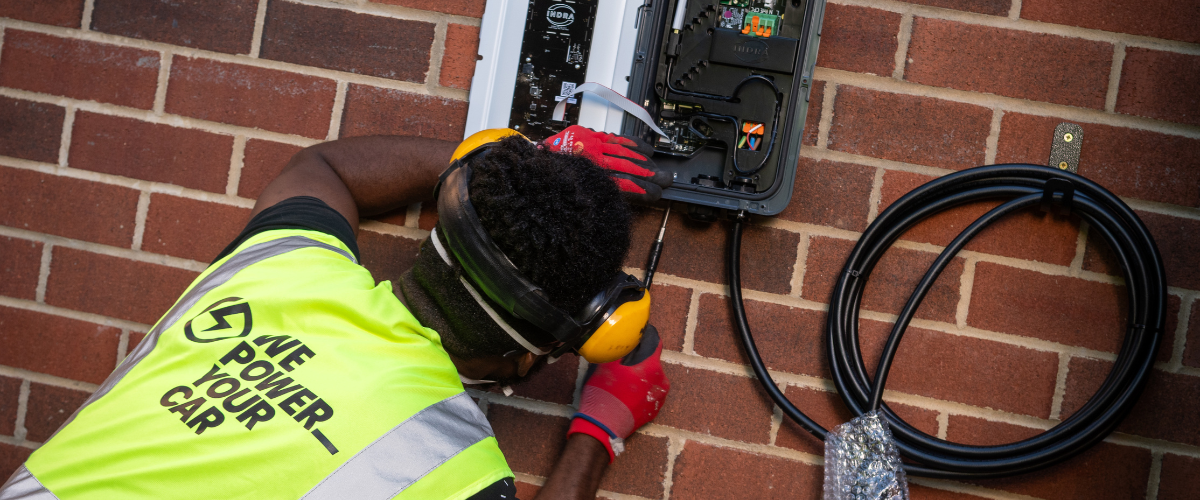
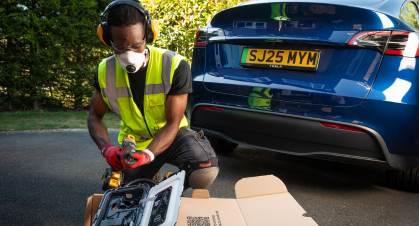
7. Installation day
On the day, you’ll need to:
- Be at the property on the day of the installation
- Remove any obstructions near where the EV charger will be installed and also near your consumer unit
- Have your Wi-Fi password ready so the installer can connect your EV charger to the internet (if required). Don’t worry – details will not be kept.
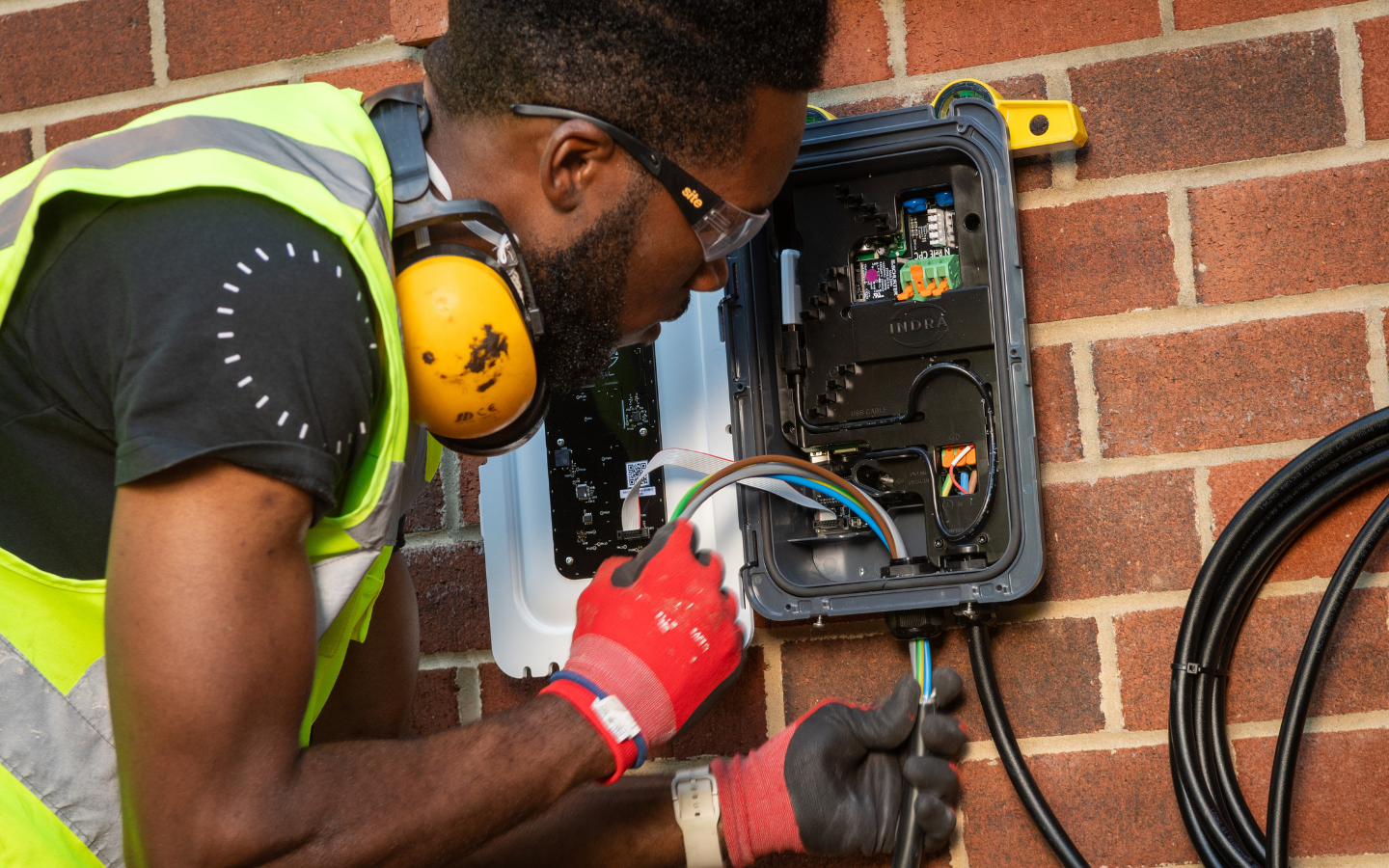
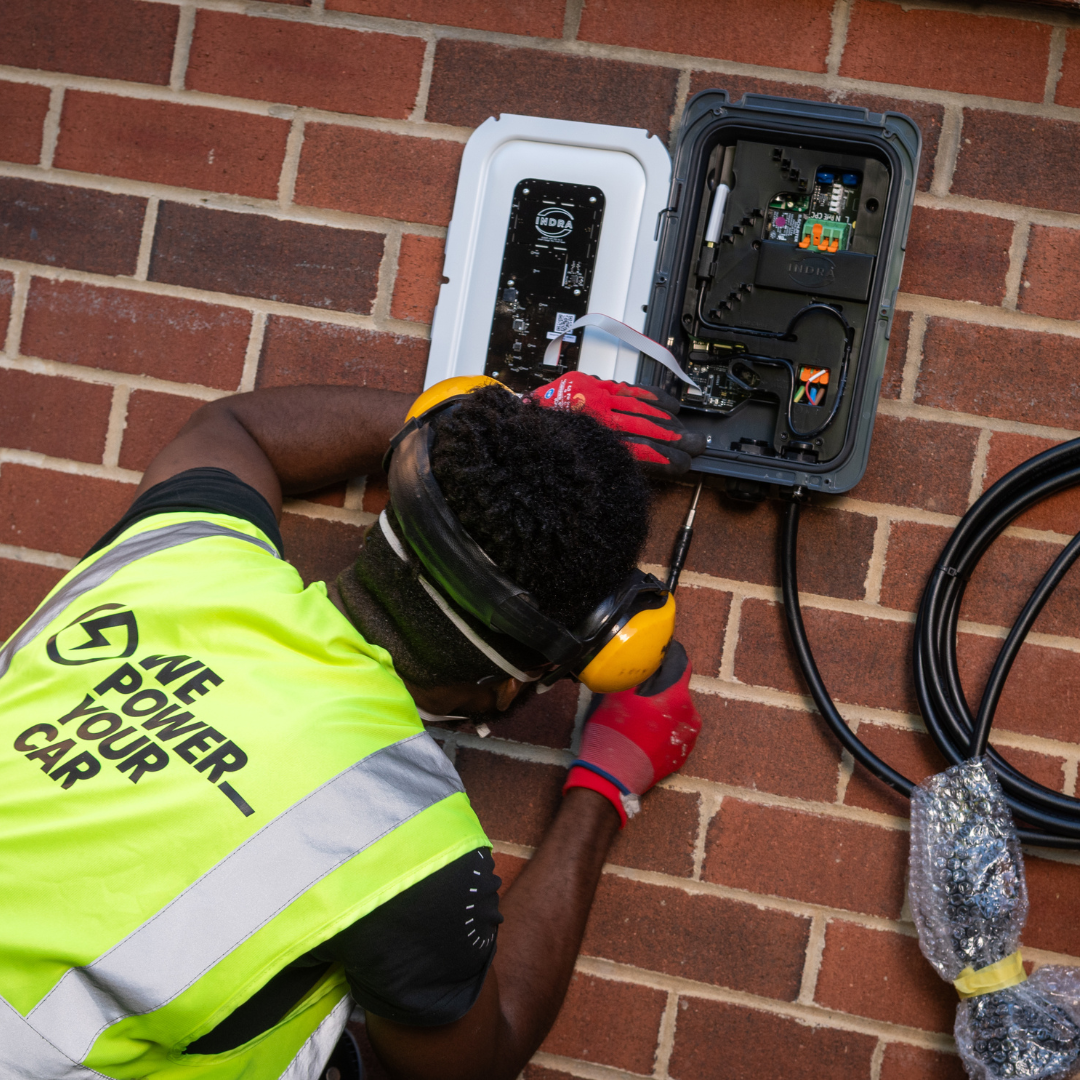
What the engineer will do:
- Isolate the power (switching off the power)
- Mount the charger to a permanent structure (or post)
- Run the cable
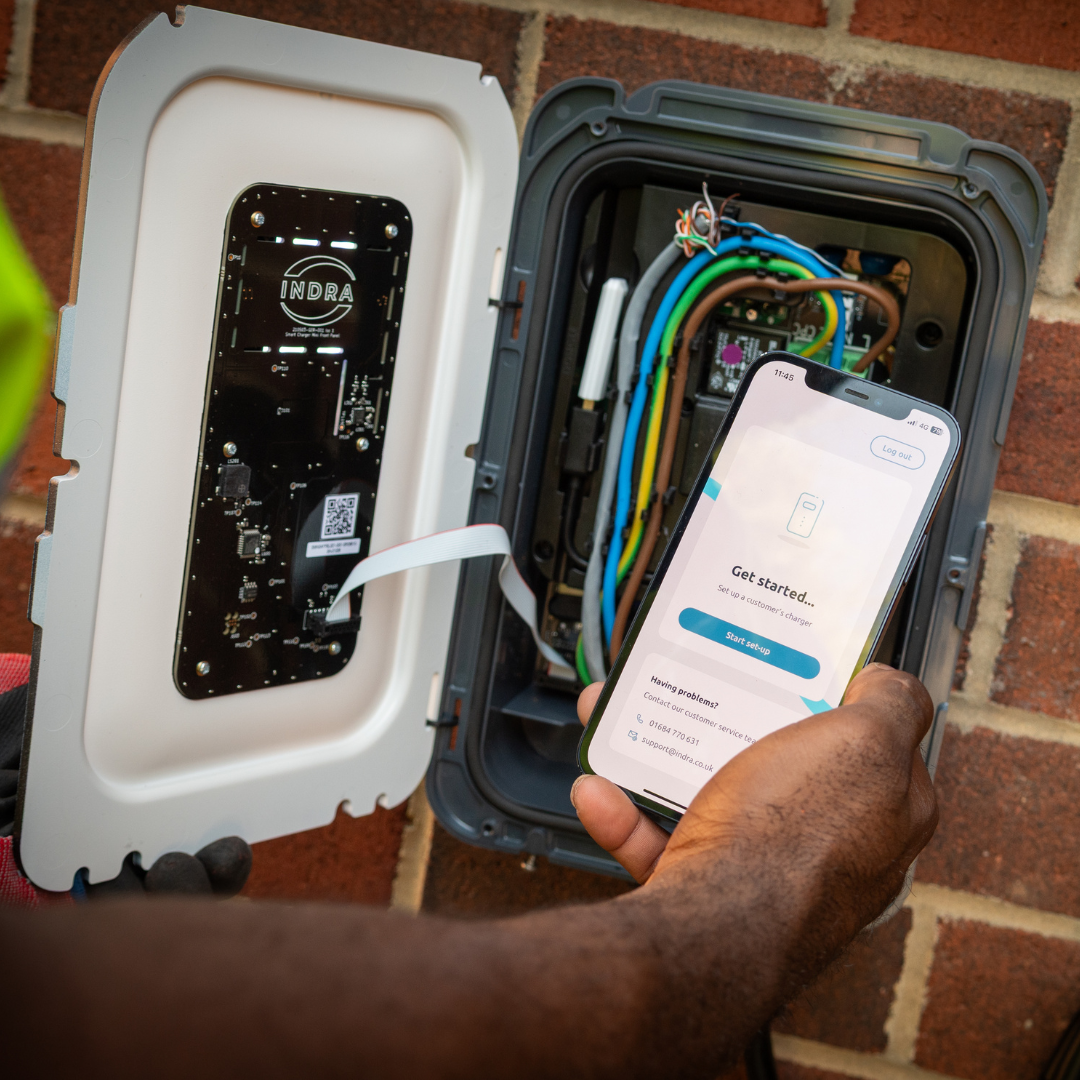
- Set up the connection (Wi-Fi or 4G)
- Download and set up the app
- Commissioning and testing
- Demonstration and handover
8. Post-installation: Electrical Installation Certificate (EIC), warranty and information
After your installation, you’ll receive an Electric Installation Certificate. The document proves your installation is safe and complies with the BS 7671 Wiring Regulations, in addition to documenting the work taken, including test records.
Overall, there is no set timeline for when the EIC needs to be sent. Most of the time, it can take over a week as the installer ensures the correct details are recorded.
How long does it take to install an EV charger at home?
The time it takes to physically install an EV charger is around 2-3 hours, on average. This is based on a standard single-phase, 7kW home EV charger installation, excluding any additional work.
That said, the actual length of time to install an EV charger will depend upon a few factors:
- Where your charge point is installed. For example, detached garages will take longer than an installation on your drive.
- The number of electric car chargers. Doubling the chargers will take double the average time.
- Whether any further time-consuming work is required, and therefore more materials and labour are needed, such as routing the cabling underground.
What’s the lead time for an EV charger installation?
While 2-3 hours is the approximate timeline for a physical installation, the lead time for an EV charger installation from start to finish is much, much longer, sitting at about 2-6 weeks in 2026.
In fact, some complex EV charger installations can take weeks, if not months, to plan, schedule and handle the necessary requirements and permissions for a safe, legally compliant electric vehicle charger installation.
Top tip: We recommend purchasing your electric car charger and installation before or as soon as you’ve bought your EV to avoid disappointment.
What can delay an EV charger installation?
1. DNO approval
Your local DNO needs to be notified for every EV charger installation. Most DNOs aim for an initial response in ten days; however, it can be longer, especially in seasons with high EV demand (i.e. new registration plates).
That said, approval can take days, or usually weeks, if not months – especially if work is required before an EV charger is allowed to be installed.
2. Electrical supply limitations
Some UK homes, especially older properties, lack sufficient electrical capacity for an EV charger.
In these cases, the DNO may need to carry out a fuse upgrade, or in less common cases, a full supply upgrade, before installation can go ahead.
-
Looped electricity supply
If you have a looped electricity supply, you share the incoming service cable with your neighbour.
Before you can have your own EV charger, you’ll need to get your DNO to ‘unloop’ your supply.
This can take between a month and 3 months, heavily delaying your EV charger installation.
Explore looped supplies in detail.
- Electricity supply upgrade
The most common electricity supply for a UK home is single-phase, with a maximum of 7.4kW/32 amps.
In the rare case that your supply is under 7kW, you’ll need a supply upgrade before you can go ahead.
But the more common upgrade is from single-phase to three-phase. You’ll need this if you want a 11kW or 22kW EV charger.
Upgrades are time-consuming and very expensive.
Note: 11kW and 22kW EV chargers are not possible on a single-phase electricity supply.
3. Property access and permissions
Leaseholders, tenants, and properties in conservation areas or listed buildings will require permissions before an EV charger can be installed.
4. Grant paperwork
The government requires relevant paperwork to be completed, including dated quotes, proof of vehicle, proof of address or permissions from landlords, and more, before you can be approved for a grant.
Processing times can vary, so it can push back your installation timeline.
How do you minimise delays?
Choose an experienced, accredited EV charger installer who can accurately handle the entire process for you.
Where are the best places to install an EV charger?
1. Driveway
The most common location for an EV charger. The easy access to plug in and charge is enough for most EV drivers. Driveway installations also tend to be cheaper than other locations, due to the shorter cable runs.
2. Garage
Never worry about getting caught in the rain; installing an EV charger in a garage keeps you sheltered from the weather. Not only that, but garage EV chargers add another layer of protection from unwanted use.
Be aware that a detached garage will be much more complex, with longer cable runs, network connection issues, and the potential need for a new consumer unit.
Wall-mounted or post-mounted EV charger: which is better?
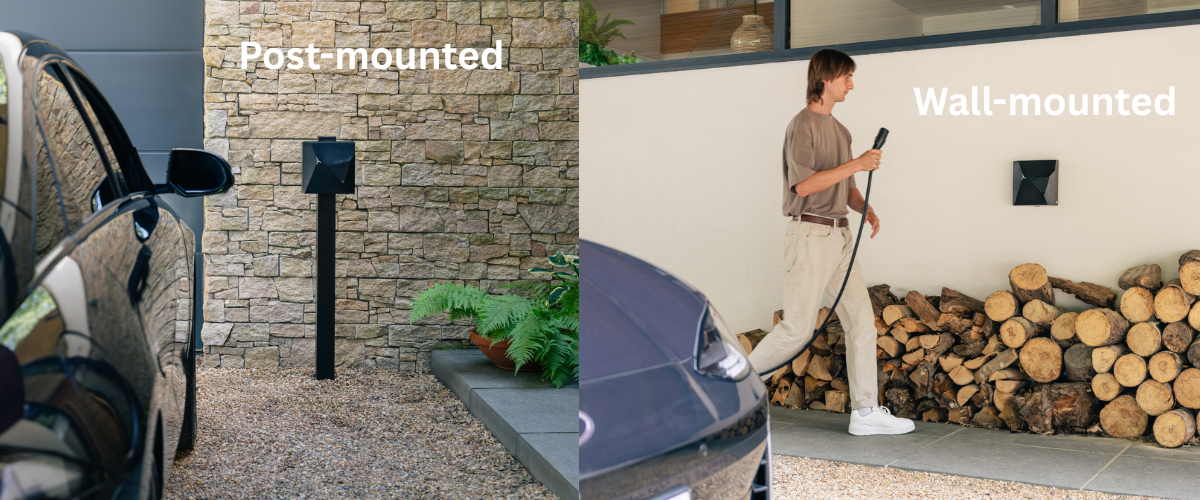
The choice between a wall-mounted or post-mounted EV charger is down to you and your preference.
If you choose wall-mounted, your EV charger needs to be installed on a strong, permanent structure, such as a brick wall. That means you can’t have an EV charger installed on a garden fence.
In our experience, wall-mounted is the typical choice for EV drivers.
That said, if you’re struggling to find a strong wall, or if you prefer the appearance of an EV charger on a post, you can have your EV charger installed on a post – for an extra cost.
How do I choose an EV charger installer?
Choosing the right EV charger installer is crucial for a smooth, safe installation. Take time to review the following factors for each company, and see if they are the right fit for you:
1. Accredited, certified installers
Search for the following certifications and accreditations on your hunt for the right engineer for you:
- NICEIC
- OZEV
- ISO
- Alcumus SafeContractor
- HERS
- NAPIT
- SIP
- TrustMark
Top tip: SIP-accredited installers can provide a safer, quicker EV charger installation. There are only a handful in the UK to date, including We Power Your Car.
2. Look at real customer reviews
Trustpilot, Google, Feefo: all these platforms are excellent when getting real feedback from real people.
3. Aftercare and maintenance offerings
Does the installer offer aftercare and the chance for servicing down the line?
If not, consider what would happen if your EV charger stopped working or seemed to decline in performance. Companies that offer servicing and maintenance give you peace of mind further down the line.
4. Compare quotes
Some installers don’t offer like-for-like supply and installation quotes. Later down the line, you might incur additional costs that weren’t included in their standard installation package.
When requesting quotes, make sure to see what the installer is offering and compare it with others.
If the price seems too good to be true, it might be because it is.
Do you need planning permission for an EV charger installation?
Nine times out of ten, no, you don’t need planning permission for an EV charger installation, especially with the 2025 changes to the regulations.
The only exception is listed buildings and conservation areas, where planning permission will likely be required.
Interested in a professional EV charger installation? Trust the experts.
Choosing an OZEV-approved installer such as We Power Your Car is essential to ensure a smooth, stress-free EV charger installation.
With a team of over 50 in-house EV charger installers across the UK, all DBS-checked, experienced and accredited, get peace of mind that your installation will be held to the highest standards.
Don’t believe us? Browse thousands of Trustpilot reviews from our happy customers (spoiler: We’re rated 4.9 Excellent).
Still undecided? Take a closer look at our credentials:
- OZEV-approved
- SIP accredited
- HERS approved
- NICEIC approved
- Safe Contractor approved
- ISO 9001, ISO 14001 and ISO 45001 accredited