





What is Gas & Water Bonding? Earth Bonding Explained
Earth bonding connects metal services such as gas and water pipes to your property’s electrical earthing system.
Its purpose is simple: to reduce the risk of electric shock and improve electrical safety within your home.
If you’re having an EV charger installed, your installer may ask you to confirm that you have gas and water bonding before your installation can go ahead.
The good news is that many UK homes already have earth bonding in place, especially new builds. And if it doesn’t? It’s usually a straightforward job for a qualified electrician, such as ourselves.
Today, as OZEV-approved, SIP-accredited EV charger installers with over 40,000 installations under our belt, we give you the full breakdown on earth bonding, covering:
- What is earth bonding, including gas and water bonding
- Why you might need it
- Why it’s important for EV charger installations
- How to get it
- Who can install it
Quick summary:
- Earth bonding helps protect people and property from electric shock.
- It connects metal gas and water pipes to your home’s electrical earthing system.
- Bonding is required under current UK wiring regulations (BS 7671).
- If your incoming gas and water pipes are plastic, bonding may not be required.
- Installing gas and water bonding typically costs between £100 and £500, depending on the property and complexity of the work.
- Evidence of water and gas bonding is required before an EV charge point installation to ensure electrical safety and avoid extra costs.
What is earth bonding?
In short, earth bonding is a safety measure that connects exposed metal services, such as gas and water pipes, to your property’s electrical earthing system.
The purpose? To help keep all metalwork at the same electrical potential. If an electrical fault occurs, the fault current is safely directed to earth rather than through a person touching the metalwork.
Earth bonding helps to:
- Prevent electric shock
- Improve electrical safety
- Help electrical installations comply with current regulations
- Support safe EV charger installations
What is gas bonding?
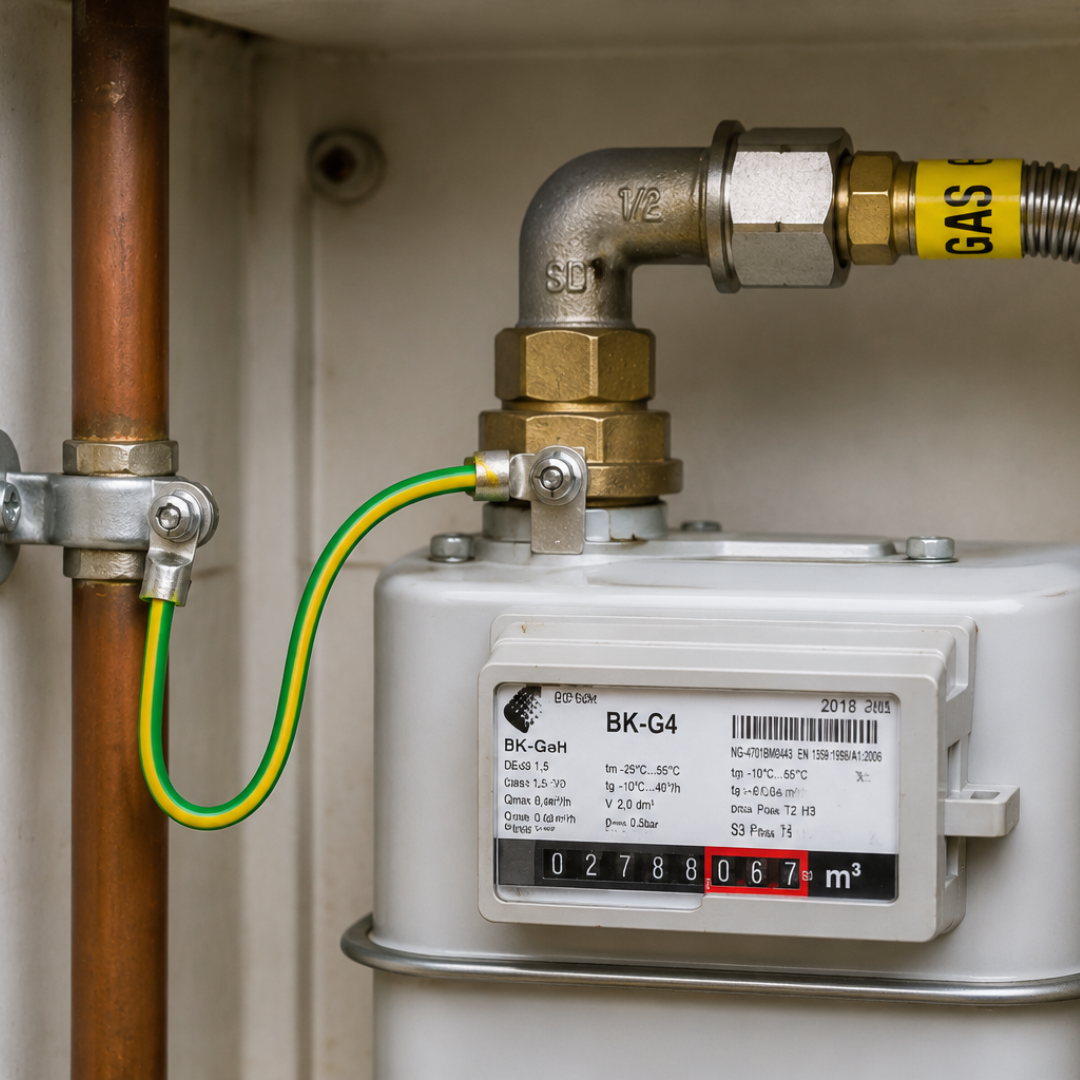
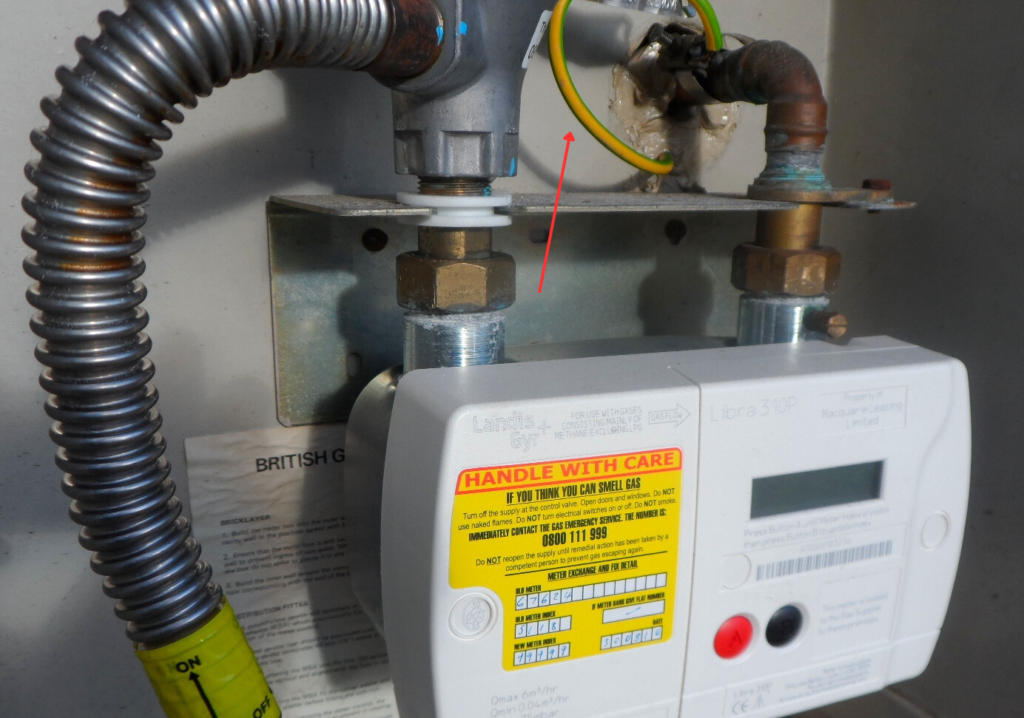
Gas bonding is the connection between the metal gas pipe and your property’s electrical earthing system.
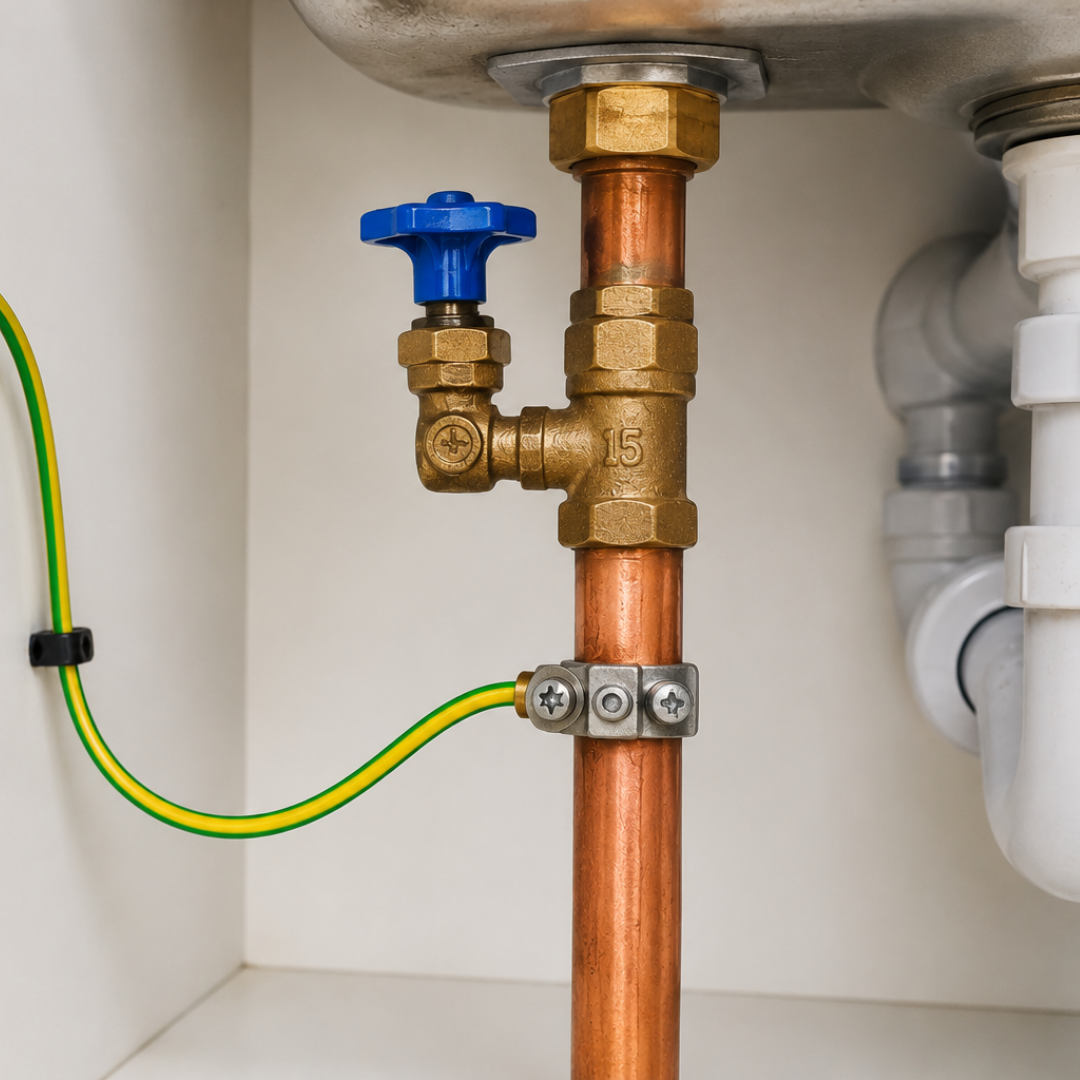
It’s usually installed close to the gas meter using a green-and-yellow cable and a metal clamp.
What is water bonding?
Water bonding is the connection between the metal water supply pipe and your property’s electrical earthing system.
It’s normally installed close to where the main water pipe enters the property.
Why might you need gas and water bonding?
1. Electrical safety
The primary purpose of earth bonding is safety.
Without bonding, metal gas and water pipes could become live during an electrical fault, creating a risk of electric shock.
Earth bonding provides a safe path for fault currents, helping protective devices operate correctly.
2. Compliance With Current Regulations
Earth bonding forms part of the requirements set out in BS 7671 (IET Wiring Regulations).
Where bonding is required, the protective bonding conductor is typically 10mm² in domestic installations.
How do I check if I have earth bonding?
Look for:
- A yellow and green cable connected to a metal pipe
- A metal clamp securing the cable to the pipe
- Bonding cables near your gas meter or water stop tap
- Bonding conductors connected back to the Main Earthing Terminal (MET)
If you’re unsure, you can also provide your latest Electrical Installation Condition Report (EICR) or electrical certificate for review.
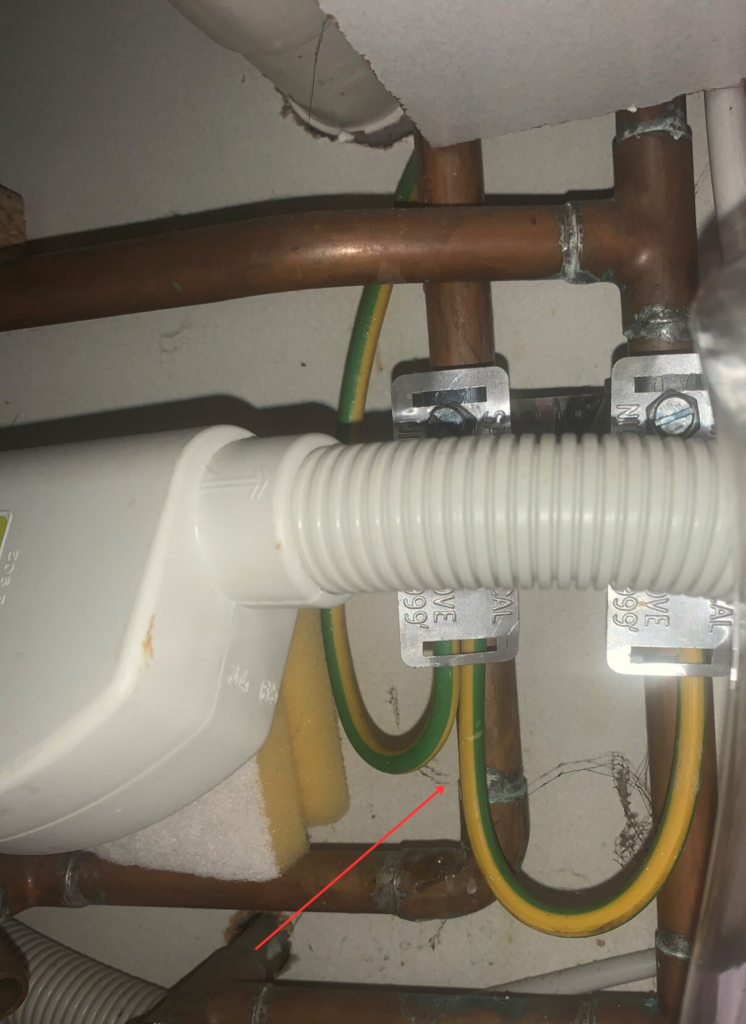
Where can I find water bonding?
Step 1: Locate the main water stop tap
Water bonding is usually found:
- Under the kitchen sink
- In a utility room
- Near where the water supply enters the property
Step 2: Look for a green and yellow cable
The bonding cable is typically:
- Attached to a copper water pipe
- Located within approximately 600mm of the stop tap
- Secured using a metal bonding clamp
See our water bonding example below.
Where can I find gas bonding?
Step 1: Look in or around the gas meter area for a green-and-yellow cable connected to a metal gas pipe.
The gas bonding cable is usually:
- Clamped to a copper gas pipe close to the gas meter
- Located inside the gas meter box
- Found just inside the property at the gas pipe’s point of entry
Step 2: Check internal pipework if necessary
If you cannot find the cable outside:
- Check the internal section of pipework immediately after it enters the property.
See our gas bonding example below.
Why do we ask for photos before an EV charger installation?
Before an EV charger installation, we ask you to provide photographs of your gas and water bonding.
This allows us to:
- Confirm compliance with current regulations
- Identify any remedial work required
- Avoid installation delays on the day
- Ensure the installation can be completed safely
What if I can’t find my earth bonding?
If you’re unable to locate your gas and water bonding:
- Check around the gas meter and water stop tap again.
- Review any recent electrical certificates.
- Contact a qualified electrician, such as We Power Your Car, for advice and support.
If you’re struggling, you can also send us photographs or your electrical certificate, and we’ll help assess whether bonding is present.
I can’t find my bonding. What happens next?
If, after a thorough search, you can’t find your gas and water bonding, it’s likely you don’t have bonding in place.
Since earth bonding is a legal requirement, to have your EV charger installation go ahead, you will need to have gas and water bonding installed. This will require an additional payment.
At We Power Your Car, if our engineers discover compliant bonding already exists on the day, any pre-agreed bonding charge will be refunded.
However, if you refuse to have gas and water bonding installed, we will have to abort the installation for safety reasons, and unfortunately, you may be charged a fee.
Do I always need earth bonding?
No, earth bonding is generally only required where incoming services are metallic.
Bonding may not be required if:
- The incoming water supply pipe is plastic
- The incoming gas supply pipe is plastic
- There are no extraneous conductive parts entering the property
Who can install gas and water bonding?
Gas and water bonding should only be installed by a qualified electrician, such as We Power Your Car.
Where required, we can usually install bonding at the same time as your EV charger installation, helping reduce disruption and additional visits.
How much does gas and water bonding cost?
Costs vary depending on the property, cable runs and complexity of the installation.
Type of bonding |
Typical cost |
|
Gas bonding only |
£80-£150 |
|
Water bonding only |
£80-£150 |
| Gas and water bonding |
£200 – £500 |
Is earth bonding the same as an earth rod?
No.
Earth bonding and earth rods perform different functions.
- Earth bonding connects metal services such as gas and water pipes to the electrical earthing system.
- An earth rod provides a connection to the ground as part of certain earthing arrangements.
Haven’t got your EV charger yet? Trust the experts for your supply and installation.
As one of the UK’s leading EV charging experts, we offer full, nationwide EV charger supply and installation services:
- DBS-checked, accredited and expert electricians across the UK
- Friendly, unbiased advice
- Reliable, safe installation
- A wide range of market-leading electric car chargers
- Trusted by thousands of UK EV drivers
When you’re ready, get your free EV charger and installation quote, or feel free to browse our wide range of smart EV chargers.
Alternatively, call one of our EV charging experts at: 03333 44 96 99, or explore our complete guide to EV charger installation.
FAQ: Earth Bonding and EV Chargers
Is earth bonding required for an EV charger installation?
In many properties, yes. Installers must ensure the electrical installation meets current safety requirements before installing an EV charger.
Do plastic pipes need earth bonding?
No. Plastic pipes do not conduct electricity and typically do not require protective bonding.
What colour is a bonding cable?
A bonding cable is normally green and yellow.
Can I install earth bonding myself?
Earth bonding should be installed and verified by a qualified electrician.