








Pay Per Mile Tax on Electric Cars: Complete UK Guide
Summary:
- Battery electric vehicle (BEV) drivers will be subject to a 3p per mile pay-per-mile tax charge after April 2028.
- Plug-in hybrid vehicles (PHEVs) are subject to the pay-per-mile taxation, but at a smaller fee of 1.5p per mile.
- The 3p per mile tax rate will go up with inflation each year
- Nothing is set in stone: pay per mile is in a consultation period, although it’s coming to an end.
The tax landscape for electric vehicles is shifting rapidly. In the past, EVs were eligible for unique tax benefits: exemption from Road Tax (VED) and the Congestion Charge, as well as no fuel duty tax. All because of their zero-emission vehicle status.
But as EV adoption thrives in the UK, with over 1,880,000 electric cars to date, taxes need to change to keep pace with demand and ensure a sustainable future.
One of these key changes is the proposed UK introduction of a new pay-per-mile road tax, expected in 2028.
While a good sign for the electrification of the UK, this, of course, comes with immediate downsides if you’re already an EV convert or if you have your eye on a brand-new BEV in the future.
Today, we explore what we already know about pay-per-mile tax in the UK, and what this could mean for you as a current or potential EV owner.
What is a pay-per-mile tax?
Simply put, a pay-per-mile tax is where you pay a small fee per mile you drive, administered by the DVLA.
Pay-per-mile tax will be paid on top of the current Road Tax (Vehicle Excise Duty).
Is a pay-per-mile tax coming to the UK?
In short: yes, pay-per-mile tax is coming to the UK. Announced by Rachel Reeves in the 2025 November Autumn Budget, electric cars will be subject to eVED, or what most people are calling the pay-per-mile tax, in April 2028.
Who will be subject to the pay-per-mile tax?
- UK-registered fully electric battery electric cars, whether bought outright or leased, including salary sacrifice and company cars. Any UK-registered EV outside the UK will also have to pay pay-per-mile tax.
- Plug-in hybrid electric cars registered in the UK (hybrids that are capable of charging with an EV charge point)
Who won’t be subject to the pay-per-mile tax in 2028?
- Hydrogen cars
- Standard hybrid vehicles (hybrid’s that can’t be plugged into an EV charging point)
- Electric vans
- Electric buses
- Electric coaches
- Motorbikes
- Petrol and diesel cars (vehicles with combustion engines)
Is the pay-per-mile tax the same as eVED?
Yes: pay per mile tax is also referred to as VED+ and eVED. They are the same, just different names.
What’s the difference between eVED and VED?
Vehicle Excise Duty (VED) is more commonly known as road tax. VED is your yearly flat rate to drive your car.
On the other hand, eVED stands for electric vehicle excise duty, and is the pay-per-mile tax structure.
How much will the pay-per-mile tax cost?
Electric vehicle owners will pay 3p per mile as part of the pay-per-mile tax, commencing April 2028.
According to the BBC, an EV driving up to 8,500 miles per year in 2028 is expected to pay £255.
To work out how much pay per mile tax you will pay in 2028, use the Electric Car Salary Sacrifice’s handy, free pay per mile tax UK calculator.
Real-world pay-per-mile examples:
BEV and PHEV pay-per-mile estimations (2028 rates)
Vehicle model |
Vehicle type |
Mileage |
Rate |
Annual cost |
| Tesla Model 3 | EV | 5,000 miles | 3p per mile | £150 |
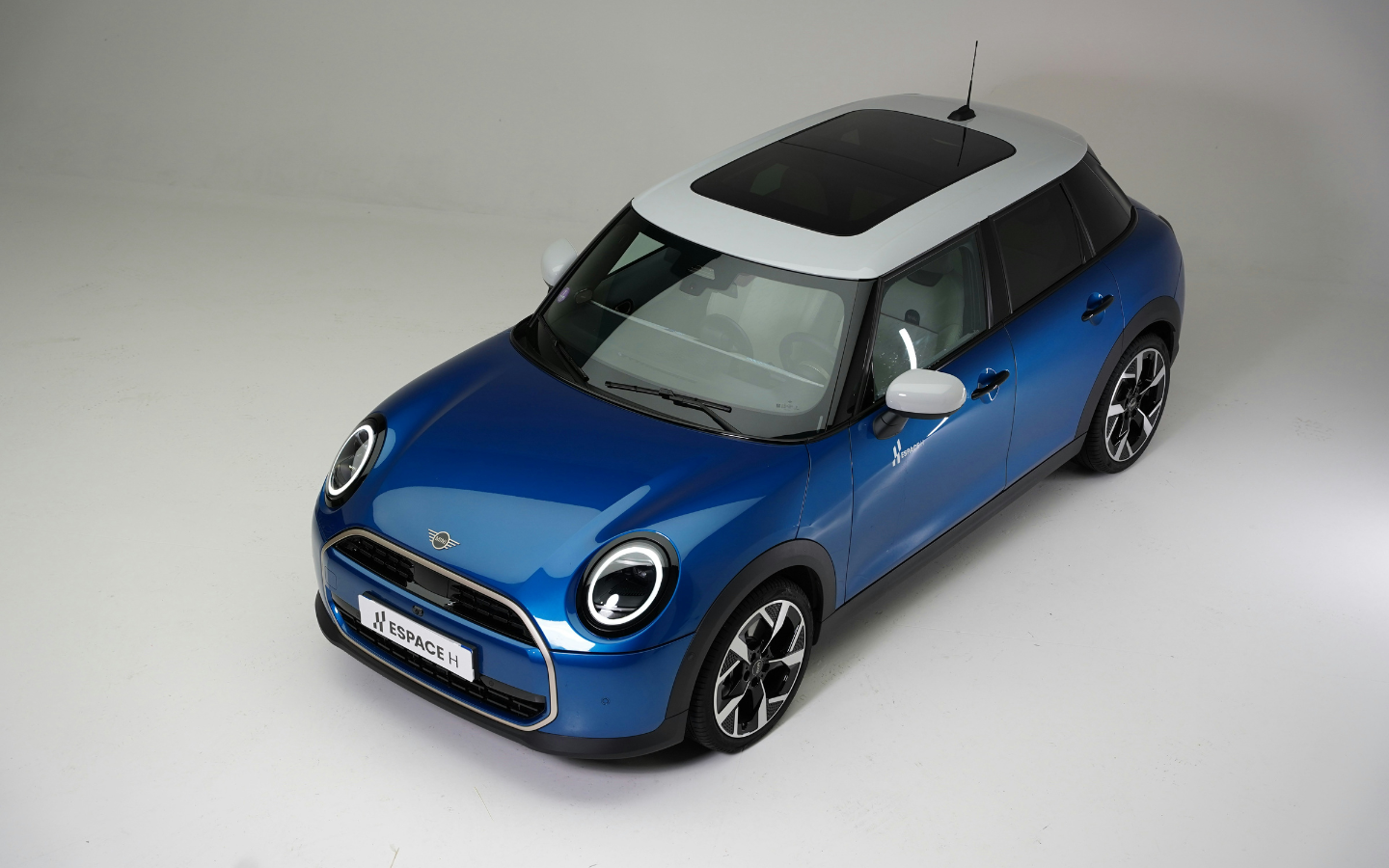
| Mini Electric | EV | 10,000 miles | 3p per mile | £300 |
| BMW 330e | PHEV | 12,000 miles | 1.5p per mile | £180 |
Estimated fuel duty for petrol and diesel vehicles (current rate: 52.95p)
Type of vehicle |
Mileage |
Rate |
Annual cost |
| Ford Puma | 5,000 miles | 52.95p | £270 |
| Vauxhall Corsa | 10,000 miles | 52.95p | £535 |
| MINI Cooper | 12,000 miles | 52.95p | £660 |
Will the pay-per-mile tax change?
While nothing is set in stone, the UK government has said that the 3p pay-per-mile tax will likely change, increasing yearly to match inflation.
EV pay-per-mile: how will it work?
Electric car owners will be taxed 3p per mile each year. Plug-in hybrid drivers will be charged 1.5p. The amount you pay will therefore depend on how much you drive annually.
How will the 3p per mile be enforced?
Specifics could change, but so far, we know that electric car drivers will be expected to self-report their pay-per-mile tax at the beginning of each year.
Of course, worries surrounding underpaying or overpaying are circulating in the UK.
To caveat this, your actual mileage will be recorded during your yearly MOT (for cars older than 3 years). For vehicles younger than 3 years, you’ll be expected to visit your nearby garage to note your mileage.
If you overpay, you’ll get credit back for the new year. Underpay? You’ll have to pay the difference.
Whispers of the UK government logging your mileage by installing a tracking device have been debunked. This will not be the case.
Why is the pay-per-mile tax being introduced?
In the plainest terms, a pay-per-mile tax is being introduced to recoup lost taxes. While petrol and diesel already pay fuel tax, the UK government have been missing fuel duty revenue from electric cars.
The launch of the pay-per-mile charge for electric cars is therefore to even the playing field. Ensuring that petrol, diesel, hybrid and electric vehicles are all taxed fairly.
In fact, it’s expected that the pay-per-mile tax will bring in £1.1 billion in 2028-2029, and £1.9 billion by 2030.
Is the start of the pay-per-mile tax a knock-back for electric vehicle adoption?
In our opinion, no. On the surface, it may seem like a punishment for EV UK drivers, but it’s actually a clear sign that EV adoption is at an all-time high, and the electric future is almost guaranteed.
Additionally, if the UK government needed to push electric car uptake, it would have held off introducing the EV pay-per-mile tax until closer to 2030, when the ban on the sale of petrol and diesel vehicles will come into play.
What tax do electric cars currently pay?
- Road tax (Vehicle Excise Duty)
- Benefit-in-kind tax: 4% for 2026/2027
- Congestion Charge
- Expensive Car Supplement (for EVs over £50,000)
- VAT: 5% for home charging, and 20% for public charging.
Are electric cars exempt from other taxes?
The exemption stage of electric cars is disappearing. As shown above, EVs are subject to a number of taxes, just like petrol and diesel drivers.
That said, while not exempt, there are several advantageous tax benefits to adopting EV:
- EVs pay the lowest Road Tax band of £10 for the first year
- Low benefit-in-kind rates: 3/4% in 2026 for EVs against a petrol car that emits 120 g of CO2 per km at a whopping 28% BIK rate.
- 5% VAT on home charging against 20% VAT on petrol
- 100% first-year capital allowance exclusion for businesses
- Salary sacrifice schemes (lower national insurance contributions)
Final thoughts: Is the free tax window closing for EVs? Will it impact EV adoption?
The free tax window for EVs is closing. But electric cars will remain cheaper. Fact. Lower running costs (especially when coupled with an EV charger and EV tariffs), less maintenance and repair costs, and additional perks like no ultra-low emission costs, make adopting electric cars significantly cheaper. Costs are just some of the perks, too: explore our guide for the full pros and cons of EV adoption.
The introduction of pay-per-mile tax only provides more stability for the future of EV adoption as it transitions from seemingly new tech to the standard vehicle type.
Of course, with EV sales narrowly missing the ZEV mandate targets, it could be a hindrance for some minds. SMMT, for example, states:
But, with such rapid growth, in addition to strong EV incentives, such as the Electric Car Grant scheme, there are plenty of reasons for people to still switch.
Slash EV charging costs by investing in an EV charger.
Cheaper. Greener. More convenient. Charge for as little as 7p per kW with the right EV charging set-up, all from the comfort of your own home.*
Trust the experts. With over 2,000 Trustpilot reviews, 25,000 installations under our belt, and an abundance of accreditations and experience, we ensure your charger and installation process is stress-free and hassle-free.
Plus, as nationwide EV charger installers, we can install EV chargers wherever you are. All with first-class customer service.
Don’t believe us? Take a closer look at our credentials:
- Safe Isolation Provider
- TrustMark approved
- ISO accredited (ISO 9001, ISO 14001 and ISO 45001)
- OZEV-approved
- NIC EIC approved
- Safe Contractor Approved
- HERS accredited
When you’re ready, browse our range of smart electric car chargers, get your free charger and installation quote, or contact one of our EV charging experts at 03333 44 96 99 for unbiased, tailored advice.
*Based on the Intelligent Octopus Go tariff and a compatible EV charger.